Most scuff marks on laminate lift with a soft dry cloth and gentle rubbing. If a mark resists, move up one step at a time: a barely damp cloth, then a cleaner suitable for laminate, and only as a last resort a stain remover applied with a cloth, within your floor’s care instructions. That cautious order is the safest answer to how to remove scuff marks from laminate flooring, because abrasives, oils and excess water can cause damage that no cleaner can undo.
Is It a Scuff, a Scratch or Damage?
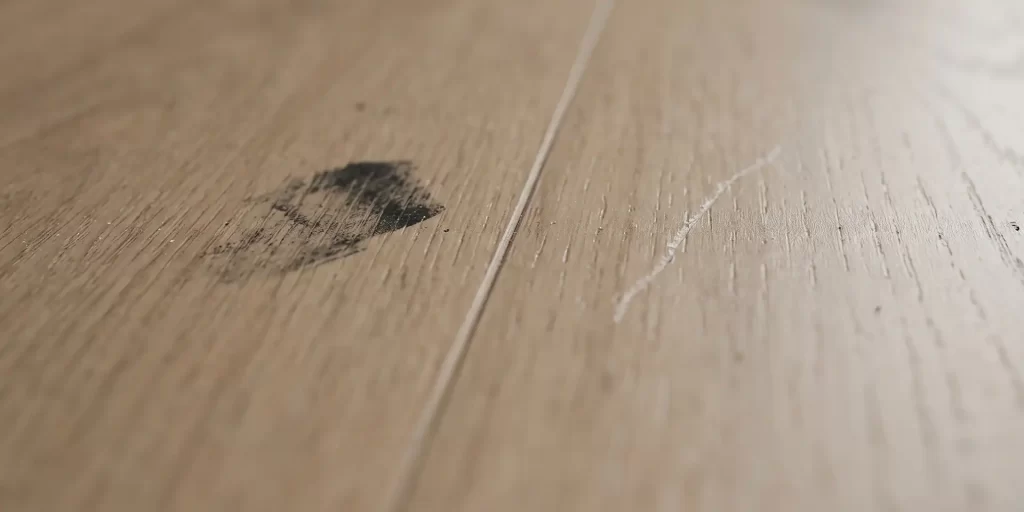
Before you clean anything, identify what you are looking at. Run a fingernail across the mark:
- Your nail glides over it: it is a scuff, material such as rubber or dirt sitting on the surface. Cleaning can remove it.
- Your nail catches: it is a scratch that has cut into the wear layer. Cleaning will not remove it, so go to the repair section below.
- The board edge is raised, swollen or chipped: this is damage to the board or joint, not a mark. Stop cleaning and plan a repair or replacement with your installer, or with Floorna if it supplied the floor.
At any stage, stop if the sheen of the surface starts to change, because that means you are wearing the finish rather than removing the mark.
The Best Way to Remove Scuff Marks from Laminate Floors, Step by Step
Work through these steps in order and stop as soon as the mark lifts. This is how to remove scuff marks from laminate flooring without using more force than the mark needs:
- Remove loose grit. Vacuum with a soft brush attachment or sweep first, so you do not grind sand into the surface while you rub.
- Buff with a dry cloth. Many light marks lift with gentle circular rubbing using a soft microfibre cloth.
- Wipe with a barely damp cloth. For its laminate ranges, Egger recommends damp cleaning with vinegar water or its own laminate cleaner, using products that do not build up layers or penetrate the edges. Wring the cloth well, then dry the area.
- Try gentle friction. Some general cleaning guides suggest a clean tennis ball or a white vinyl eraser, which is not the same as a melamine sponge. This is not an Egger instruction, and friction can change the sheen of matt, textured or glossy surfaces, so test it first in an inconspicuous area, such as inside a wardrobe.
- Use a solvent as a last resort. For stubborn stains on its laminate, Egger allows local use of a commercial stain remover or thinner, applied with a cloth and never directly onto the floor, with fresh air in the room and a wipe with water afterwards. Egger does not address scuff marks specifically, so try it on a small area first, and follow your own manufacturer’s instructions if your floor is another brand.
If the mark is still there after the last step, it is likely a scratch or surface damage rather than a scuff, and no method for how to remove scuff marks from laminate flooring will shift it. For care advice on a specific range, see our guide to caring for Egger Home laminate flooring.
How to Get Scuff Marks off Laminate Flooring When Shoes and Furniture Cause Them?
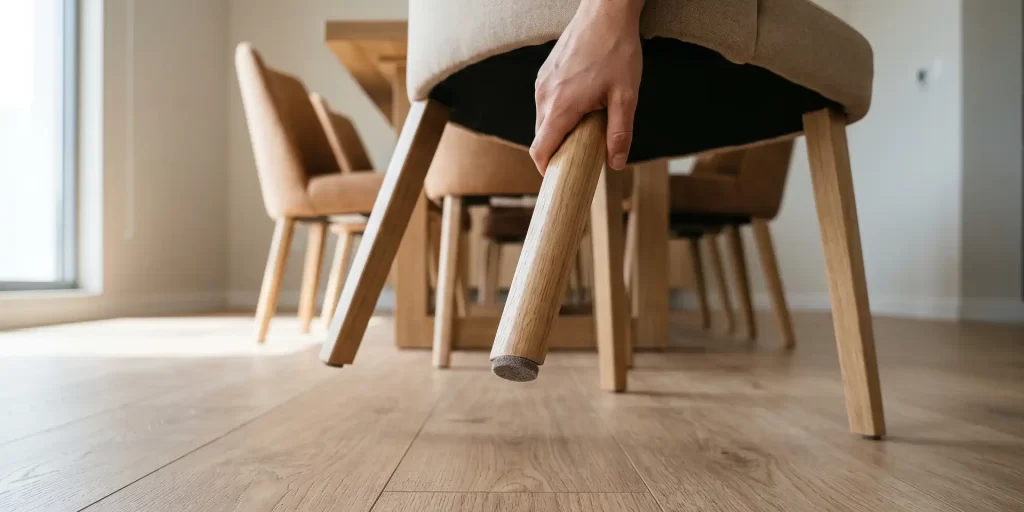
Knowing the cause tells you which step will work and how to stop the mark coming back:
- Shoes: rubber heel marks and dark soles leave black streaks that usually lift with a dry or barely damp cloth. They return unless shoes come off at the door.
- Furniture feet: rubber or plastic feet on chairs and tables leave lines when they are dragged. Clean the lines as above, then fit felt furniture pads to every leg and replace them when they wear thin or collect grit.
- Chair castors: hard castors leave grey trails over time. Egger recommends soft castors of type W for its floors, and an office chair mat protects the area under a desk chair that moves all day.
- Sand and grit: trapped particles act like sandpaper and can turn a simple scuff into a scratch. Doormats inside and outside each entrance stop most of it at the door.
How to Remove Scuff Marks from Laminate Flooring: Natural Methods and What to Avoid?
Are Natural Methods Safe on Laminate?
A search for “how to remove scuff marks from laminate flooring natural” turns up plenty of home remedies, but natural does not automatically mean safe. Much of the natural cleaning advice shared online is general household advice, so check each method against your floor’s care instructions before you try it.
Diluted household vinegar on a cloth wrung out well fits the damp cleaning Egger describes. Three other popular remedies are best skipped: baking soda paste and toothpaste are mild abrasives that can dull the surface and leave a film in textured decors, and oils such as olive oil leave a slippery coating that attracts dust.
Products and Methods to Avoid on Laminate
Many popular cleaning tips cause more harm than the mark itself, so leave these out of your plan for how to remove scuff marks from laminate flooring unless your product’s instructions say otherwise:
- Melamine sponges: they act as a very fine abrasive and can leave dull or shiny patches.
- Scouring pads and steel wool: they scratch the surface and dull the finish.
- Wax, polish and spray lubricants: they leave a slippery film that attracts dirt, and Egger advises against waxing and polishing its laminate.
- Steam cleaners: among its laminate ranges, Egger approves steam only for NatureSense Aqua+, with the cleaner kept moving and filled with clear water only. On Floorna, decors such as White Casella Oak belong to this range.
- Wet mopping: water can reach the joints and make the core swell.
- Sanding: it removes the printed decor layer permanently.
If your floor is actually vinyl, different rules apply, and the methods in our guide on how to fix scratches on vinyl flooring are for that material only, not for laminate.
Prevent New Scuffs
Every mark you prevent is one you never have to clean, so prevention is the cheapest part of how to remove scuff marks from laminate flooring. Take shoes off at the door, lift furniture instead of dragging it, check the pads under chairs every few months, and dry clean the floor regularly so grit never builds up.
If you are replacing a floor in a busy home, check the usage class before you buy. Egger laminate on Floorna is labelled with thickness and usage class, such as 8/32 or 8/33A+, and our guide to scratch resistant flooring explains which grades cope best with heavy traffic.
Repairing a Mark That Is Actually a Scratch
Cleaning cannot fix a scratch, but minor damage can often be disguised with a product made for laminate, leaving the surface itself untouched. Never sand or polish the area to blend it in.
Egger offers a repair paste called Decor Mix & Fill for light scratches and minor surface damage on Egger laminate floors, and it notes that more severely damaged boards can be replaced by a specialist. Keep a few spare boards from the installation for exactly this reason.
Frequently Asked Questions
1. Will magic eraser remove scuff marks on floor?
It may lift the mark, but melamine sponges work as a very fine abrasive and can leave dull or shiny patches, particularly on matt or textured decors. Egger’s care guidance for its laminate rules out abrasive cleaning, so skip it and start with a dry cloth and a barely damp cloth instead, then check your own floor’s care instructions.
2. How to repair badly scratched laminate flooring?
On Egger laminate, light scratches and minor surface damage can be treated with Decor Mix & Fill. Boards with more severe damage are best replaced by a specialist, which is easier if you kept spare boards from the installation. Never sand laminate, because sanding removes the printed decor.
3. How do I remove black marks from my laminate floor?
Black marks usually come from rubber soles or furniture feet. Buff them with a dry cloth first, then with a barely damp cloth and a laminate cleaner. If a mark remains on Egger laminate, its guidance for stubborn stains allows a commercial stain remover or thinner applied with a cloth, never directly to the floor, with fresh air and a wipe with water afterwards. Other brands may give different instructions, so check yours first.