This guide explains how scratch resistant flooring UAE homes need is measured, which types rank highest, and what really causes scratches here. You get a ranked list, the specifications to ask for, prevention tips for sand and pets, and how to repair minor damage.
Scratch Resistant Flooring UAE: The Short Answer
No floor is scratch-proof, but the most scratch resistant flooring UAE families can buy is high usage class laminate, followed closely by rigid LVT, both in a matte or brushed finish and a light to mid tone.
Laminate resists surface abrasion best thanks to its hardened top layer. Rigid LVT absorbs impact better and lets you replace a single plank. At Floorna we specify both for homes with children and pets.
Scratch-Resistant vs Scratch-Proof: The Truth
The scratch resistant vs scratch proof distinction matters because one of them does not exist. Scratch-resistant means the surface is engineered to withstand abrasion for a rated level of use.
Scratch-proof would mean nothing can ever mark it, and no flooring sold anywhere meets that claim. A supplier promising a scratch-proof floor is describing marketing, not a specification. Scratch resistant flooring UAE buyers can trust is rated for heavy domestic traffic and hides light marks.
What Actually Scratches Floors in UAE Homes?
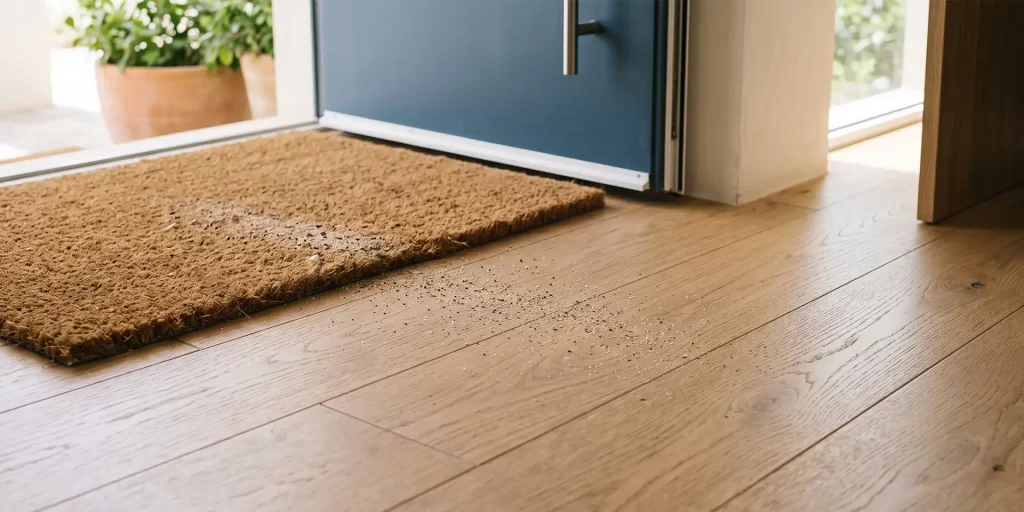
Four culprits cause almost all the damage we see in UAE homes:
- Sand and fine dust, by far the biggest cause locally, acting like sandpaper underfoot
- Furniture legs, especially dining chairs dragged daily
- Pet claws, which mark softer finishes over time
- Moving furniture without lifting it, causing the deepest gouges
Sand scratches flooring more than pets do here, which is why entrance matting matters more than material choice.
How Scratch Resistance Is Measured?
Most scratch resistant flooring UAE retailers sell is rated on one of two scales, and mixing them up is the commonest mistake.
1. Laminate: Usage Class and AC Rating
Egger boards are marked with thickness and usage class, written as 8/31, 8/32 or 8/33A+. The usage class describes the traffic intensity the surface is rated for, and corresponds to the abrasion class quoted as AC3, AC4 and AC5.
A higher class beats a thicker board every time: an 8 mm class 32 board outperforms a thicker class 31 board. Our Egger laminate flooring range spans class 31 through to 33A+.
2. Rigid LVT: Wear Layer and Surface Coating
On vinyl, ask for the wear layer, the clear protective film over the printed design, measured in millimetres. Thicker is better, and a surface coating adds resistance to scuffing.
Rigid LVT also has a dense core that resists denting from dropped objects, which laminate handles less well. For how the cores compare, see laminate vs SPC flooring.
Ranking: Flooring Types From Most to Least Scratch-Resistant
Ranked for the way scratch resistant flooring UAE households buy is actually used:
- High class laminate (32 to 33A+): hardest surface against abrasion and sand
- Rigid LVT: slightly softer, but far better against impact and repairable plank by plank
- Standard laminate (class 31): fine for bedrooms and light traffic
- Engineered and solid wood: softest surface, marks easily
- Thin sheet vinyl: tears and scuffs quickly under furniture
Finish and Colour: Why Matte Light Oak Hides Scratches?
Most buyers forget this: specification decides resistance, finish decides what you see. Matte flooring hides scratches because it scatters light instead of reflecting it, while gloss acts like a mirror.
Colour works the same way: light and mid oak tones such as Ivory Brushed Oak disguise dust and fine scratches, while very dark floors show both.
How to Prevent Scratches in UAE Homes?
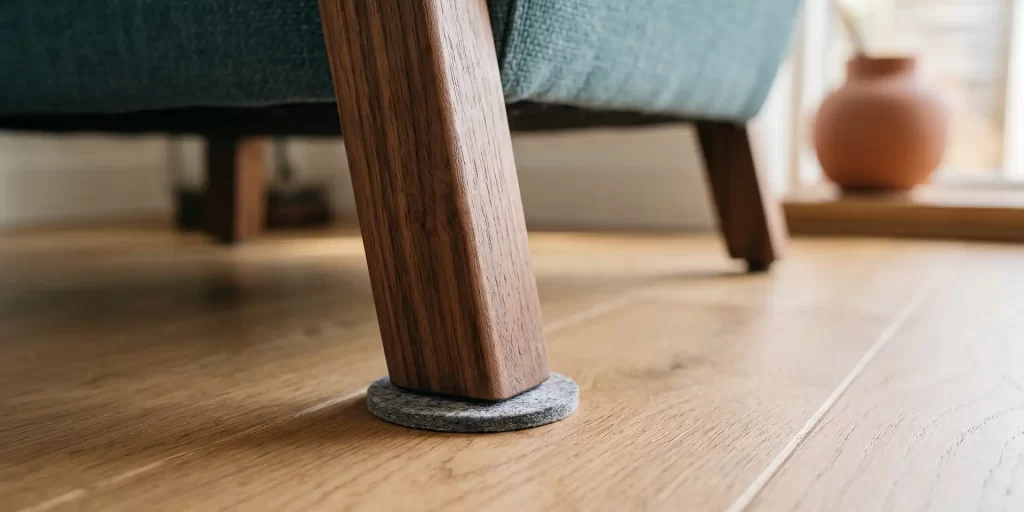
These five habits do more for scratch resistant flooring UAE families own than any spec upgrade:
- Put a coarse entrance mat at every external door to trap sand
- Sweep or vacuum dry regularly, since grit underfoot grinds the surface
- Fit felt pads to every chair and table leg, checked yearly
- Use a rug under dining tables and desk chairs, the highest wear zones
- Keep pet claws trimmed and never drag furniture across the floor
How to Fix Minor Scratches on Laminate and LVT?
Even the scratch resistant flooring UAE families choose will mark eventually. Light marks respond to a colour-matched repair wax. Deeper damage is different: on a floating click floor a single plank can be lifted and replaced. Our guide on how to fix scratches on vinyl flooring covers both cases.
Our Most Scratch-Resistant Picks at Floorna
Three scratch resistant flooring UAE families rely on, for busy homes:
- Egger NatureSense Aqua+, class 8/33A+: our highest rated laminate, 110 AED per m² supplied, 149 AED installed with skirting
- Egger NatureSense, class 8/32: strong everyday performance, 90 AED per m² supplied, 134 AED installed with skirting
- Bergo rigid LVT: best for impact and repairability, 140 AED per m² supplied, 180 AED installed with skirting
Pair any of them with a matte, light to mid tone. For pet friendly flooring specifically, see our guide to the best flooring for pets.
Choosing Scratch Resistant Flooring UAE Homes Can Live With
Scratch resistant flooring UAE families need comes down to three decisions: a high usage class or thick wear layer, a matte light to mid finish, and a mat at every door.
Get those right and the floor still looks new years later. Order free samples, view them in your own light, and use our visualiser to preview each in place.
Frequently Asked Questions
1. Is laminate or vinyl more scratch resistant?
Laminate wins on surface abrasion thanks to its hardened top layer, especially at class 32 and above. Rigid LVT wins on impact resistance and repairability, since a damaged plank can be replaced individually. Both count as scratch resistant flooring UAE families can rely on.
2. What does AC4 mean in laminate flooring?
AC4 is an abrasion rating for heavy domestic and light commercial traffic, corresponding to usage class 32. It sits above AC3 and below AC5, and describes how well the surface layer resists wear, not how thick the board is.
3. Is any flooring truly scratch-proof?
No. Every floor sold is scratch-resistant to a rated degree, never scratch-proof. The realistic goal is scratch resistant flooring UAE buyers can actually get: rated for heavy domestic traffic, in a matte light tone that disguises the fine scratches that do occur.
4. Which flooring is best for dogs and cats in the UAE?
Class 32 or higher laminate, or rigid LVT, both in a matte finish. For pet friendly flooring, rigid LVT has the edge on comfort and noise underfoot, while laminate resists claw abrasion slightly better.
5. Does sand scratch vinyl flooring?
Yes, over time. Fine sand is abrasive and grinds the wear layer when walked on. Entrance mats, dry sweeping and removing shoes at the door prevent far more damage than any upgrade in specification.
6. Can scratches on LVT be repaired?
Yes. Light scratches respond to a colour-matched repair kit, while deep damage is solved by lifting and replacing the affected plank. Plank level repair is one of rigid LVT’s main advantages over tiles or sheet vinyl.