Can you mop laminate floors? Yes, but only with a damp mop, never a wet one. Laminate has a fibreboard core that swells when water reaches the joints, so the amount of water matters more than the product you use. This guide covers which mops are safe, how to use them and what to do if water gets into the floor.
Can you mop laminate floors?
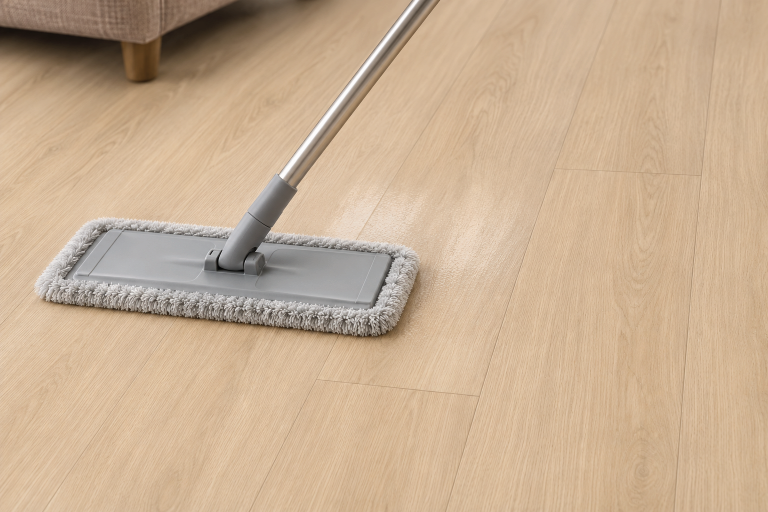
You can mop laminate floors safely when the mop is well wrung out and the floor is dried straight afterwards. EGGER’s care instructions say to wipe its laminate with a slightly damp cloth only, remove spills straight away and never flood the floor. A damp mop picks up dust and marks without letting moisture run into the joints, which is where damage starts. Think of it as wiping the floor with a damp cloth on a handle. For the full routine, from vacuuming to stain removal, see Floorna’s guide on how to clean laminate floors.
Why is too much water bad for laminate flooring?
Laminate is built from a decorative surface over a wood fibre core. The surface shrugs off a quick wipe, but the core absorbs water that finds its way into the seams, the edges or under skirting boards.
What happens when water gets into the joints?
The core swells, the edges lift and the board can no longer sit flat. That is how water damaged laminate flooring begins, and swollen boards rarely return to their original shape. Joints that already have gaps let water reach the core faster. The guide on gaps in laminate flooring explains what causes them and how to close them.
What is the best way to mop laminate floors?
The rule is simple: use little water, a soft mop head and dry the floor immediately.
Damp mop vs wet mop
A damp mop leaves no visible water and the floor dries within a minute or two. A wet mop leaves pools and drips and should never be used. If you can see a shine of water on the floor, you have used too much.
Microfibre and spray mops
Microfibre pads are gentle, trap dust and hold little water. The best mop for laminate floors is usually a flat microfibre mop, and a spray mop gives extra control because you add only a fine mist as you go. Avoid string mops, which can hold too much water, and scrubbing pads that scratch the surface.
Which mops are safe on laminate?
| Mop type | Safe on laminate? | What to know |
| Flat microfibre mop | Yes | The best everyday choice when wrung until barely damp |
| Spray mop | Yes | A fine mist keeps water use low |
| String mop | Not recommended | Holds too much water and drips into the joints |
| Steam mop | No, except EGGER Aqua+ | On Aqua+, keep it moving and use clean water only |
| Robot mop | Low water setting only | Use a damp microfibre pad and avoid heavy spray |
Step by step: how to mop laminate floors
First, sweep or vacuum with a soft head to remove grit. Second, wring the microfibre pad until it is barely damp, or mist the floor lightly. Third, mop along the length of the boards in small sections. Fourth, dry with a clean microfibre cloth. Check the finish of your boards before you start, especially if you are choosing from the Egger laminate flooring range.
What should you mop laminate floors with?
Plain lukewarm water is often enough. For marks, use a cleaner made for laminate, such as EGGER’s own Clean-it, which its care instructions recommend. Avoid products that leave a film, because residue builds up and dulls the surface. EGGER’s guarantee terms also exclude damage caused by cleaning agents it does not recommend, so the right cleaner protects the warranty too.
Can you mop laminate with vinegar?
Only as a spot treatment. EGGER’s care instructions suggest lukewarm water with a household vinegar cleaner for stains such as coffee, tea or juice, followed by a wipe with a cloth dampened in clean water. For everyday mopping, stay with plain water or a laminate cleaner.
Which cleaners should you never use on laminate?
Avoid wax, polish, harsh chemicals, abrasive powders, scouring pads and steel wool, because they scratch or leave a slippery film. Melamine sponges and baking soda paste also wear the surface, as the guide on how to remove scuff marks from laminate flooring explains.
Can you steam mop laminate floors?
Usually no. EGGER says steam can force moisture into the seams of standard laminate. The exception is its NatureSense Aqua+ range, which can be steam cleaned if the cleaner keeps moving and uses clear water only. If you are unsure which product you have, treat it as standard and use a damp mop instead.
How often should you mop laminate floors in UAE homes?
Damp mop once a week in busy areas and every two weeks in quiet rooms, and sweep or vacuum every few days so fine dust does not scratch the surface. EGGER’s own minimum is a damp mop at least every two months, so treat these intervals as a practical suggestion for UAE dust levels, not a manufacturer rule.
Does water resistant laminate change how you mop?
Slightly. Water resistant boards give you more time to wipe up a spill, but they are not a reason to flood the floor. The waterproof laminate flooring guide still recommends a damp, not wet, mop.
| Point | Standard laminate | Water resistant laminate |
|---|---|---|
| Mop type | Damp, well wrung out | Damp, well wrung out |
| Steam cleaning | Not recommended | Only if the maker approves, such as Aqua+ |
| Spills | Wipe immediately | Wipe promptly, more tolerance |
| Joints and edges | Keep dry | Keep as dry as possible |
How do you mop laminate floors without leaving streaks?
Streaks come from too much product, dirty water or a floor left to air dry. Change the pad when it is dirty and buff each section dry with a clean microfibre cloth as you go.
What should you do if water is spilled on laminate?
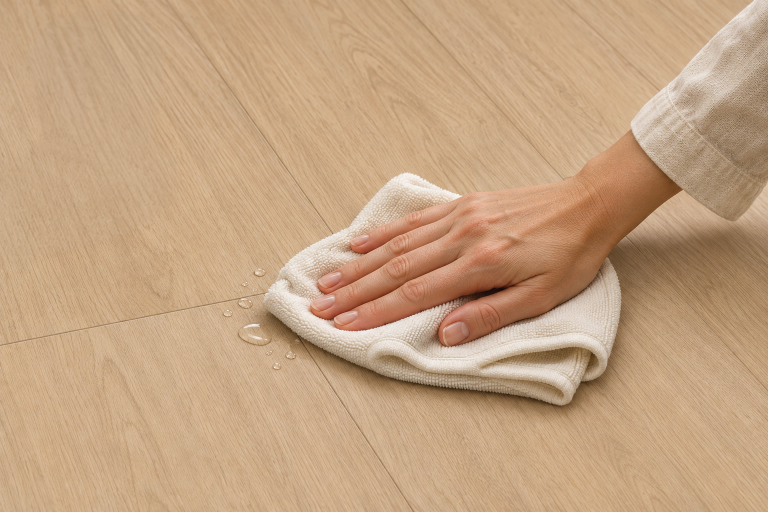
Wipe it up at once with a dry cloth, then dry along the joints and edges. Lift rugs and mats so air can circulate, and check the area again after a few hours. Standard laminate is not waterproof, so speed matters.
Signs of water damage: swelling and lifting edges
Look for raised or curved board edges, widening gaps, a soft feel and a musty smell. These signs mean the core has absorbed water. Dry the area, fix the source and call a flooring specialist if boards stay swollen.
Laminate vs vinyl: which floor is easier to mop?
Vinyl is often easier, because it has no wood fibre core to swell, but follow the care guide for the product you buy. Laminate needs a damp mop and prompt drying. Both are better with a light touch, so choose by room: vinyl for wet areas and laminate where you want a wood look and keep water use low.
Caring for Egger laminate from Floorna
Egger laminate can be mopped safely with a damp microfibre mop, plain water or EGGER Clean-it, followed by quick drying. Floorna supplies Egger laminate, including Aqua+ boards described as water resistant and suited to kitchens and bathrooms, and its Gerflor luxury vinyl tiles suit rooms where vinyl is the better fit. Check the care instructions for the exact board you choose, because steam approval applies only to specific ranges.
Frequently Asked Questions
Can you use a robot mop on laminate floors?
Only with a low water setting and a damp microfibre pad. Avoid models that spray heavily or leave pools, and check the floor maker’s guidance.
Can you mop laminate with hot water?
Lukewarm water is enough. EGGER’s care instructions refer to lukewarm water and a slightly damp cloth, so there is no reason to use hotter water.
Can you use a string mop on laminate?
It is best not to. String mops hold too much water and drip into the joints, so a flat microfibre or spray mop is the safer choice.
Can you use tile floor cleaner on laminate?
It is best not to. Tile cleaners can be harsh or leave a film. Use a cleaner made for laminate, or plain water.