
A scratch across a new vinyl floor is one of those small disasters that feels much bigger than it is. The good news is that most of them are repairable at home in under an hour, and the wrong fix does more damage than the original mark. Learning how to fix scratches on vinyl flooring starts with one thing almost every guide skips: you cannot sand vinyl back like timber. The wear layer on top is finite, and once you go through it to the printed design film, no product on earth brings it back. So the method has to match the depth. This guide covers five that work, three that quietly make things worse, and the point at which repair stops being the answer. At Floorna, the honest advice comes before the sales pitch.
Know Which Scratch You Are Dealing With
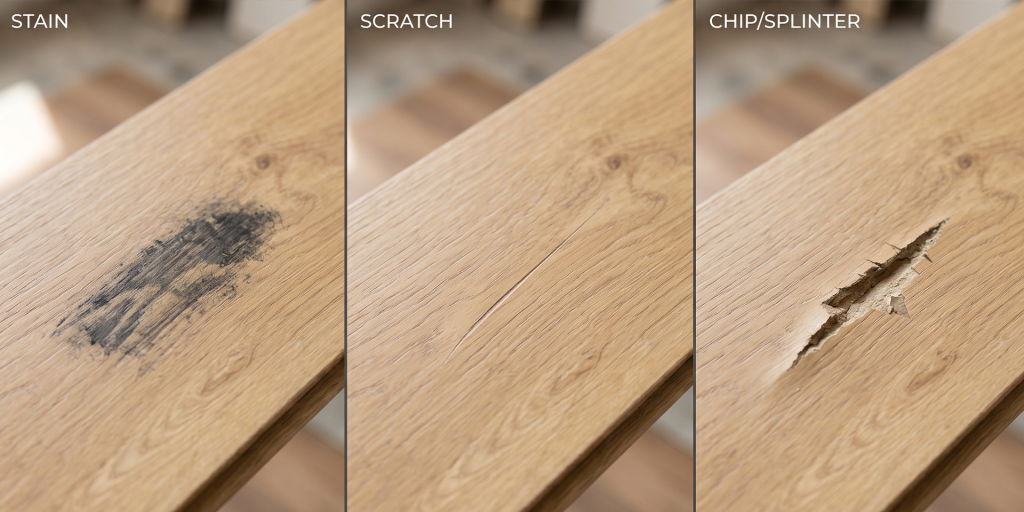
Every plank is built the same way: a backing layer, a core, a printed design layer, and a clear wear layer on top. Where the damage stops decides how to fix scratches on vinyl flooring in your case.
Surface Scuffs
A grey or black mark sitting on the finish. Your fingernail catches nothing. It is rubber or dirt transferred onto the surface rather than a cut into it, and it wipes off easily.
Wear Layer Scratches, Where How to Fix Scratches on Vinyl Flooring Really Applies
A visible line you can feel with a fingernail, but the pattern underneath is intact. This is most of what people deal with, and it is entirely fixable.
Deep Gouges
The scratch has cut through the print layer and you can see a pale line or the core. How to fix scratches on vinyl flooring at this depth means accepting you are concealing, not repairing.
How to Fix Scratches on Vinyl Flooring: The 5 Methods
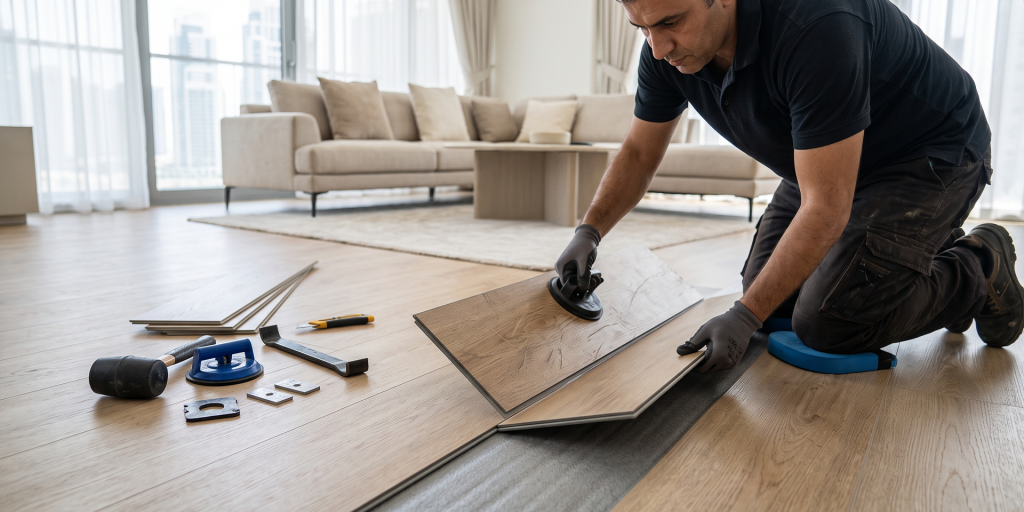
Work through these in order, because how to fix scratches on vinyl flooring depends entirely on what the previous step reveals. Never skip the first one.
1. Clean the Area Properly First
Half the marks people try to repair are dirt. Sweep or vacuum, then wipe with warm water and a drop of pH-neutral cleaner on a microfibre cloth. Dry it completely. Many scuffs vanish here, and any repair applied over trapped grit will fail. If the mark survives, it is a real scratch.
2. Buff Light Scuffs with the Right Oil
A few drops of mineral oil or jojoba oil on a soft cloth, rubbed in small circles, lifts most scuffing and restores the sheen. Wipe away every trace of excess. Use a mineral oil, never a cooking oil. Olive oil is widely recommended online and it is poor advice on how to fix scratches on vinyl flooring, because it oxidises, turns rancid, attracts dust and leaves a slick film. For scuffs, a clean tennis ball or a plain rubber eraser works just as well and leaves nothing behind.
3. Use a Vinyl Floor Scratch Repair Kit
For a scratch you can feel, a vinyl floor scratch repair kit from any hardware store is the sensible step. These are typically colour-matched wax sticks, fillers or blend markers. Test the colour on an offcut or inside a wardrobe first, because a wrong shade is more visible than the scratch was. Work the filler into the line with a plastic applicator, scrape the excess flush, and buff with a clean cloth. Bring a spare plank to the shop rather than guessing.
4. Fill Deep Scratches with a Repair Compound
To fix deep scratches in vinyl flooring that have reached the print layer, a wax stick is not enough. A vinyl or epoxy-based floor repair compound is applied with a plastic putty knife, levelled flush with the surrounding surface and left to cure fully. Once it is hard, a colour-match marker over the top blends it into the grain. Be realistic about the result. This makes the damage disappear from standing height, not from a metre away in direct sun.
5. Replace the Plank
Modern click-lock vinyl was designed for this, and it is the only answer to how to fix scratches on vinyl flooring that is truly invisible rather than concealed. A single plank lifts and swaps without disturbing the rest. Keeping four or five spares after any installation is the smartest thing you can do for a floor. Our Luxury Vinyl Flooring collections are stocked with this in mind, and our team can match a plank from your existing range.
Three Things That Make Scratches Worse
The wrong approach to how to fix scratches on vinyl flooring turns a fixable line into a replacement.
1. Abrasives and Melamine Sponges
Scouring pads, melamine erasers and abrasive powders remove the wear layer. They dull the scratch and leave a permanently duller patch that catches the light. Once the wear layer thins, that spot scratches faster forever.
2. Heat and Hair Dryers
Heat is a timber trick. Vinyl is a polymer, so warming it distorts the surface, softens the finish and can lift plank edges. No version of this helps.
3. Overusing Vinyl Floor Polish
A vinyl floor polish can restore sheen across a whole room, but it is not a scratch repair and it is not for every product. On modern click-lock planks with a factory UV-cured or PUR finish, polish often hazes, builds up unevenly, becomes slippery and can void the warranty. Check the manufacturer’s guidance before anything goes on the floor.
Why UAE Homes Scratch Faster, and How to Stop It?
The real culprit is sand. Fine airborne grit walks in on shoes and acts as sandpaper underfoot, which is why hallways show damage first, and it makes prevention far more effective than any method of how to fix scratches on vinyl flooring after the fact. Barrier mats at every external door catch most of it. Felt pads under furniture legs, a no-shoes habit, soft castors, and vacuuming rather than dry brushing handle the rest. Wear layer thickness also matters more than people realise. Twelve mil is fine for a bedroom and underspecified for a busy hallway, where twenty mil and above earns its cost quickly. If you are choosing a new floor, our guide to luxury vinyl plank flooring covers wear layers properly, and our breakdown of SPC vs vinyl flooring explains why a rigid stone core resists dents and scratching better in high-traffic zones.
Conclusion
Knowing how to fix scratches on vinyl flooring is mostly about matching the method to the depth and stopping there. Clean first, buff a scuff, fill a scratch, conceal a gouge, replace a plank when concealing is no longer honest work. Anything abrasive, hot, or applied out of desperation costs you the wear layer, and the wear layer is the floor. Being realistic about how to fix scratches on vinyl flooring also means admitting that a floor covered in damage is telling you the specification was wrong for the room, not that you repaired it badly. If you are at that point, send us a photo of the plank and the space. We will tell you honestly whether it is a repair, a plank swap, or a floor that was never right for the traffic it is carrying.