Laminate flooring colors in 2026 lean warm and natural: light and mid oak, golden tones and soft grey blended with beige, while cool, flat grey is fading. Trends only narrow the field, though. The right shade for your home depends on how much daylight each room gets, its size, the cabinets and doors you already have, and how much visible dust you are happy to live with. This guide covers the main shade families with real product examples, four checks for choosing, and a simple way to test samples before you decide.
Laminate Flooring Color Trends 2026: The Shift Toward Warmer Neutrals
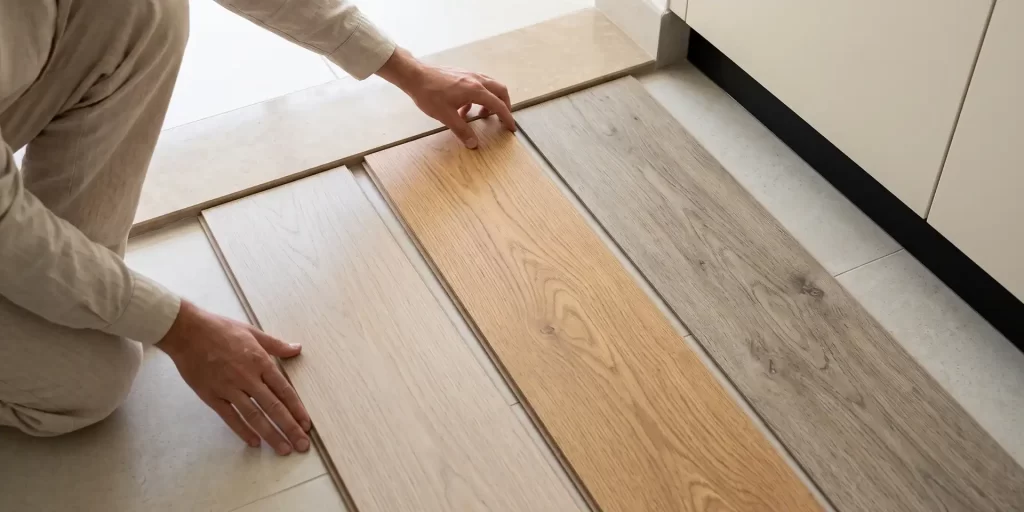
Retailer and designer roundups of the most popular laminate flooring colors 2026 all point the same way: away from the cool, flat greys of recent years and toward warmer neutrals. Light natural oak, golden mid tones and blends of grey and beige feature heavily, while very dark floors are presented as a deliberate statement rather than a safe default. Surfaces with a low sheen and wider planks also appear often, because both make a floor look calmer and closer to real timber.
These lists reflect what retailers and designers are promoting, not published sales figures, so use them to shortlist laminate flooring colors rather than as proof of what will suit your room. Our outlook on flooring trends in the UAE for 2027 points in the same direction, with light oak, matte surfaces and warm walnut among the looks it highlights.
Shade Families and Where Each One Works
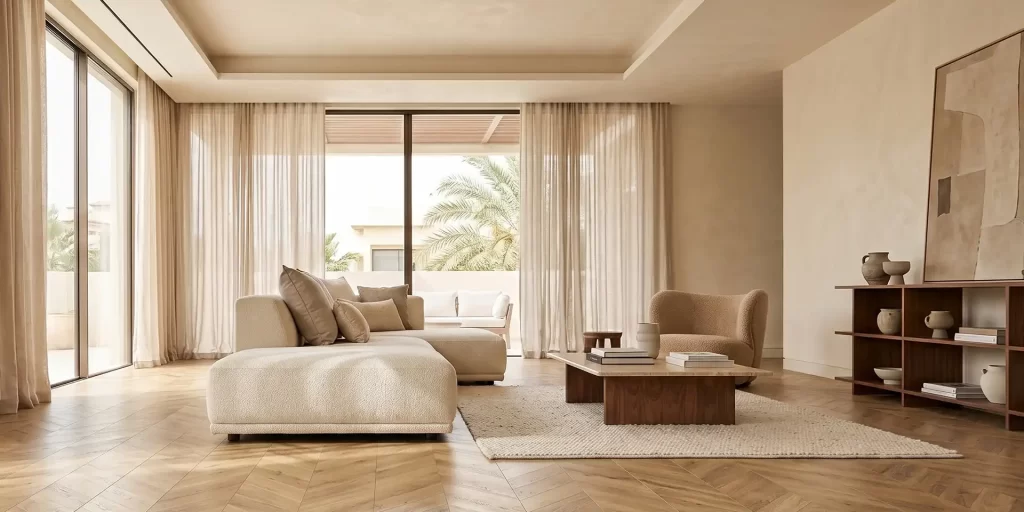
It is more useful to group laminate flooring colors into families than to chase one trending shade, because each family reacts differently to light, furniture and daily mess. The examples below are Egger decors listed on Floorna, described by the color tone each product page gives.
1.Light and Pale Oak Tones
Pale and whitewashed oak reflect daylight, which helps compact apartments and rooms with small windows feel larger and brighter. These shades suit Scandinavian, coastal and minimalist schemes, and they pair easily with white or pale wood cabinetry. White Casella Oak, from the Egger NatureSense Aqua+ range, is listed with a white color tone and described as water resistant for 72 hours, which makes it a practical light option near a kitchen. White Elton Oak, a NatureSense decor listed as white oak, comes in a 193 mm plank, narrower than the 246 mm White Casella Oak.
2.Natural and Golden Mid Tones
Mid tones such as natural oak and honey oak sit between the extremes. They are the most forgiving family: fine dust shows less than on very dark floors, and darker dirt and scuffs show less than on very pale ones, which makes them a sensible choice for family homes, rentals and busy living areas. Light Natural Casella Oak, another Aqua+ decor on Floorna, is listed as light brown and sits at the lighter end of this family.
3.Soft Grey and Beige Blends
Greige combines the calm of grey with the warmth of beige, so it sits comfortably beside the cream and beige stone found in many UAE homes. Belfort Oak Silver is listed with a beige and grey color tone and described as having silver tones, while Light Langley Walnut is listed as light brown and grey. For a clearly grey floor, Grey Sherman Oak is listed with a grey color tone. Belfort Oak Silver and Grey Sherman Oak both appear in the Clearance range. Pure cool grey still works in monochrome interiors, but on its own it can make a room feel flat.
4.Walnut and Brown Tones
Dark floors bring contrast against white walls and light upholstery, and they suit large rooms with plenty of natural light. The downside is maintenance, because fine dust, sand, pet hair and small scratches show more readily. On Floorna, Brown Casella Oak, from the Aqua+ range, is listed with a brown color tone, and Brown Warmia Walnut, from the Clearance range, with a brown walnut one, so confirm its availability first. Compare them as samples, because names and photos are not a reliable guide to how deep a shade looks. Before committing to a dark shade, read our comparison of light vs dark flooring to see how each one affects the sense of space.
Choosing the Best Laminate Flooring Color for Your Room
The same four checks work for all laminate flooring colors, and together they narrow a long list to two or three decors quickly.
1.Light and Room Size
Strong sun through large windows can wash out pale floors and make glossy surfaces glare, while cool white LED lighting at night can push a warm wood tone toward grey. Light colors make small rooms feel larger; darker shades need space and generous light to avoid feeling heavy. Look at the room at the time of day you use it most, not only at noon.
2.Undertones and Fixed Elements
Every wood tone leans warm or cool. Floors with warm undertones show yellow, orange or red hints and sit well with cream walls, brass fittings and walnut furniture. Cool floors lean toward grey, ash or blue and suit white, black and chrome. Hold samples against the things you will not change: kitchen cabinets, internal doors, stair treads and any marble or porcelain at doorways. Matching the undertone matters more than matching the exact shade.
3.Finish and Plank Format
Color is only part of the effect. A matte finish hides dust and footprints better than a glossy surface and reduces glare in sunny rooms. Decors that are embossed in register, where the surface texture follows the printed grain, look closer to real timber. Plank width changes how a color reads too. Several Egger decors on Floorna come in planks 1,292 mm long and 246 mm wide, against 193 mm for the format listed as classic, and a wider plank shows more grain and fewer joints. Our guide on how flooring shapes interior design explains how pattern, scale and direction change a room.
4.Maintenance in UAE Homes
Sand, dust and pet hair are part of daily life in many UAE homes. In practice, the most forgiving laminate flooring colors are mid tones with visible grain: very dark floors show pale dust and sand, while very pale plain floors show darker dirt and scuffs. If you have children or pets, or plan to rent out the property, a natural mid oak with clear grain is usually the safest choice.
Test Real Samples Before You Decide
Laminate flooring colors look different on a screen, under showroom lights and in your own room, so test real samples where the floor will go:
- Shortlist three decors from different families, for example one light, one mid tone and one grey and beige blend, by comparing the Egger laminate flooring range side by side.
- Order samples. Floorna offers up to three complimentary samples, dispatched by courier within 24 hours, which is enough for your three shortlisted decors.
- Lay each sample flat on the floor rather than holding it up, and look at it while standing, the way you will see the floor every day.
- Check each one in morning light, in afternoon sun and under your evening lighting.
- Place it beside the fixed elements: cabinets, doors and any stone threshold.
- Use the room visualizer on the Floorna website to preview decors across a whole room.
Before you order, confirm the details on each product page: the color tone, plank size, thickness and usage class, and whether the decor sits in the Clearance range, in which case confirm availability before ordering.
Frequently Asked Questions
1. What color laminate floor is most popular?
No public sales ranking settles this for 2026, but retailer and designer trend lists consistently highlight light natural oak, warm mid tones and blends of grey and beige, and most of them describe cool, flat grey as fading. Use these families as a starting point, then choose based on your room rather than the list.
2. What is the best color for laminate flooring?
For most homes, a natural mid oak is the most versatile option. It hides everyday dust and light scratches, suits most wall colors and furniture, and works with both modern and classic interiors. Choose lighter shades for small or dim rooms, and darker ones for large, bright spaces where you want contrast.
3. Do light laminate floors show dirt?
Light floors hide fine dust and pale sand well, but they show darker dirt, spills and scuffs more easily. A light floor with visible grain and a low sheen is more forgiving than a plain, glossy one, and doormats at entrances reduce how much grit reaches it.