
Vinyl flooring is made of stacked layers built mainly around PVC, a plastic: a clear wear layer on top, a printed design layer, a core, and in many products a backing. What differs from one product to the next is the core and how thick each layer is. What is vinyl flooring made of, layer by layer? The sections below set flexible LVT against rigid SPC and show which health and sustainability claims need proof before you rely on them.
What Is Vinyl Flooring Made Of? The Layers From Top to Bottom
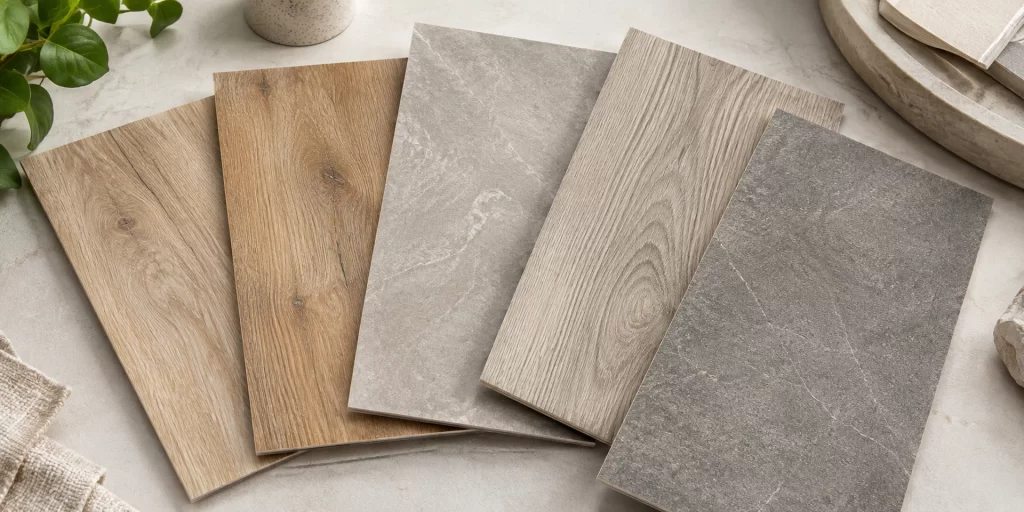
Not every product has every layer, so treat the list below as a map rather than a recipe. Read it from the surface down.
The wear layer is a transparent vinyl film that protects the printed design from scratches, scuffs and fading. Many makers add a factory surface treatment on top. Tarkett describes a PUR surface treatment on its vinyl floors, and Gerflor’s data sheet for Virtuo Rigid Acoustic 30 lists a PUR+ matt treatment on a 0.30 mm wear layer.
Below it sits the decor layer, a printed image that gives the plank its wood, stone or concrete look. It is only as durable as the wear layer above it, which is why the wear layer is the figure to compare, not the picture.
Next comes the core. In standard luxury vinyl tile and plank, the core is flexible vinyl. In rigid products it is a dense composite, which we cover below. The last layer, where present, is a backing. Sheet vinyl may have a fibreglass cushion backing, and some rigid planks have an attached acoustic layer. Floorna’s page for Sakia (code GV-1118, 229 x 1250 x 5.4 mm, listed as Gerflor Virtuo 30 Rigid) mentions integrated impact sound insulation. As a separate manufacturer example, the Virtuo Rigid Acoustic 30 sheet lists 21 dB. Request a matching technical sheet before comparing Sakia’s acoustic performance; that figure is not confirmed here for Sakia.
Put together, that is a PVC-based stack of protective film, printed layer, core and, sometimes, a backing.
Is Vinyl Flooring Made of PVC?
Yes. PVC, or polyvinyl chloride, is the base polymer, and Tarkett describes vinyl floors as composed primarily of PVC. In short, it is a PVC base plus the additives and layers that decide how it behaves; the share of PVC in a rigid composite core varies by product, so no single proportion applies to every floor. That also answers a related question. Is vinyl flooring made of plastic? Yes, because PVC is a plastic, but plastic is not the whole story. Printed films, coatings and, in rigid types, stone-polymer cores are part of the build-up.
Flexible vinyl also relies on plasticisers, the additives that let a PVC layer bend without cracking. The type of plasticiser varies by manufacturer and product, so do not assume one answer for every floor. If it matters to you, ask the supplier for the product’s declaration rather than relying on a general statement.
Luxury Vinyl and Vinyl Plank: Same Materials, Different Shapes
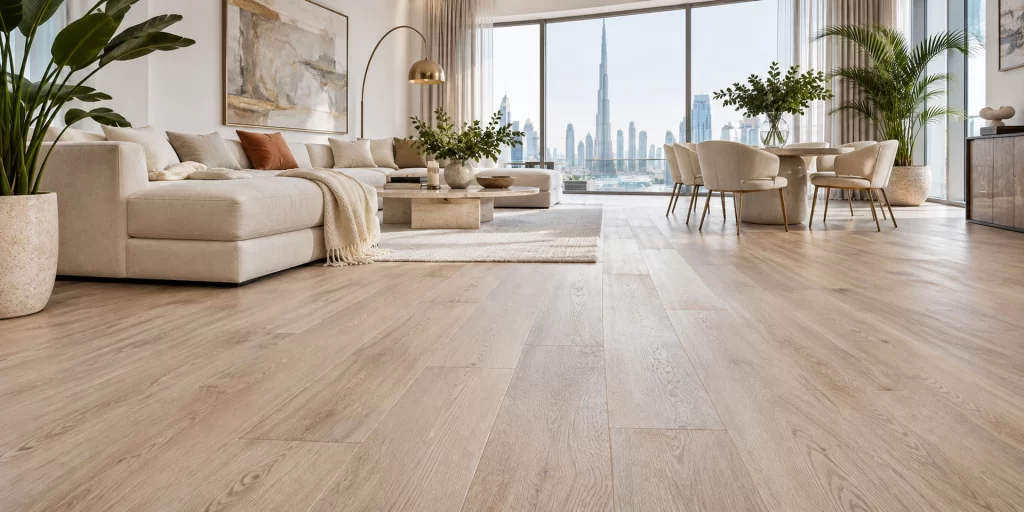
Buyers often ask “what is luxury vinyl flooring made of?” and “what is vinyl plank flooring made of?” as if they were different materials. Both are multi-layer vinyl floors built from the layers above. Plank describes the long, wood-look format and tile describes the square or rectangular format; the base material is the same family.
Floorna’s range includes Gerflor LVT flooring, which the category page describes as Luxury Vinyl Tile that imitates wood, stone or ceramic. For a broader comparison of sheet, click and glue-down formats, see Floorna’s guide to the types of vinyl flooring.
What Is SPC Vinyl Flooring Made Of? Rigid Cores Explained
Neither flexible nor rigid construction is better in every room. The Resilient Floor Covering Institute describes rigid-core flooring as modular flooring with a rigid polymeric core, a decorative top surface and, optionally, an attached underlayment. Two core types are common. SPC has a solid polymer core, which makes it denser, with greater resistance to indentation and better dimensional stability. WPC has an expanded polymer core that is lighter and offers more underfoot comfort and acoustic benefit.
In practice, that answers “what is spc vinyl flooring made of?” with a dense stone-polymer core sandwiched between vinyl layers. Floorna’s Bergo rigid LVT flooring page describes the core as typically a stone polymer or wood polymer between two layers of vinyl. For the meaning of the abbreviation and how it behaves in a room, read Floorna’s explanation of spc flooring meaning.
One caution about the letters WPC. In a vinyl floor they describe the core. The WPC decking that Floorna sells for outdoor spaces is a separate product made for outdoor use. The two share an abbreviation, not a specification, so never read decking data as flooring data.
Which Claims Need Proof?
Words such as “eco-friendly”, “non-toxic” or “optimal indoor air quality” are marketing phrases, not measurements. To check them, ask for a test result with its method and date. A brochure may answer “what is vinyl flooring made of?” for vinyl in general, so check whether it describes your exact product.
Here is an example of a claim that has a number behind it. Gerflor’s data sheet for Virtuo Rigid Acoustic 30 lists total VOC emissions below 10 µg/m³ after 28 days, measured under ISO 16000-6. That figure belongs to that range, under that test, and it does not transfer to other vinyl products. Floorna lists 35% recycled content for Sakia. For projects with a recycled-content requirement, request the supporting manufacturer declaration for the exact product.
How to Use This When You Choose?
Compare the core, total thickness, wear layer, backing and installation method. Then weigh them against the room. Floorna lists the size, thickness and colour tone on each product page, but the core and test data usually sit in the manufacturer’s data sheet, so request it. For a balanced view of what these floors do well and where they struggle, Floorna’s guide to the pros and cons of vinyl flooring is a useful next read.
Not sure whether a flexible LVT or a rigid core suits your space? Ask the Floorna team for the data sheet of the exact product you are considering before you decide.
Frequently Asked Questions
1. Does every vinyl floor have a backing?
Not always. Some products carry an attached backing and others do not, so the data sheet for the exact product is where to check.
2. Is rigid vinyl better than flexible vinyl?
It depends on the room and the subfloor. SPC cores are denser and more resistant to indentation, WPC cores are lighter, and flexible vinyl has no rigid core. Compare the data sheets rather than the labels.
3. What should I ask a supplier for?
Ask for the manufacturer’s data sheet for the exact product, naming the core, total thickness, wear layer and backing. For claims such as emissions or recycled content, ask for the test result or declaration with its method and date.