You can usually tell when SPC flooring enters a room because the space starts to feel sharper, cleaner, and more settled almost immediately, and that quick change is often what makes people decide too fast, as if the floor has already explained itself the moment the planks are down
The problem is that SPC flooring usually looks simpler than it really is, because people notice the finish first while the real difference sits underneath it, in the rigid core, in the way the floor handles pressure, and in the way it responds to moisture, movement, and daily use once the room stops being new and starts being lived in
That is why understanding SPC flooring meaning matters before the buying decision becomes only a style decision, because SPC is not just another vinyl look, and the reason it has moved so quickly into modern homes has less to do with trend alone and more to do with the way it is built to stay stable under the kind of pressure modern spaces create
In this guide, we will look at SPC flooring meaning from that practical angle, including what SPC actually is, how it differs from standard vinyl and WPC, why it has become more common in modern homes, and what buyers should understand before they choose it
What SPC Flooring Actually Means?
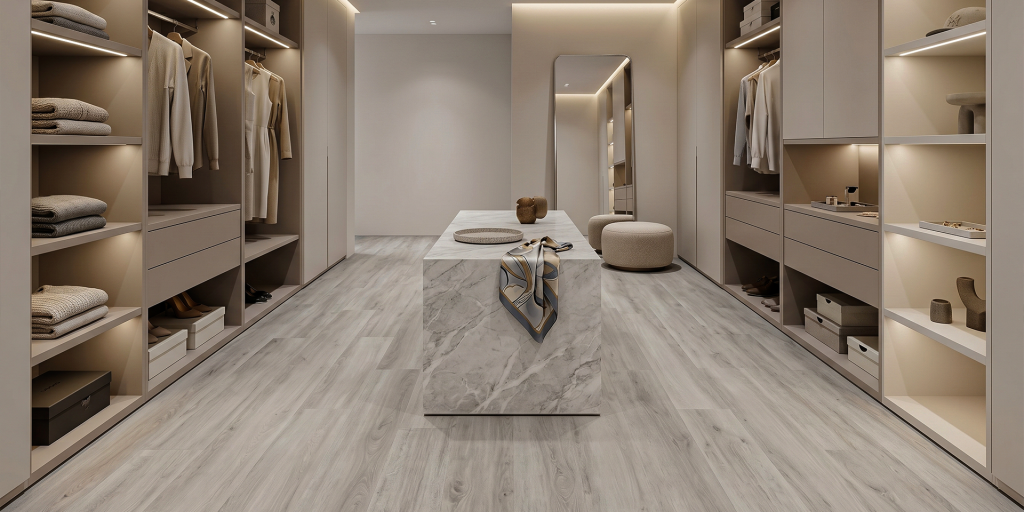
Most people hear the name SPC and assume it is just another vinyl label, but spc flooring meaning becomes much clearer once you know that SPC usually stands for Stone Plastic Composite or Stone Polymer Composite, and that both names point to the same practical idea, which is a rigid core vinyl floor built around a stone based core that gives the plank more density, more stability, and stronger resistance to dents than the average person expects from ordinary vinyl.
That is why the useful distinction is not between SPC and vinyl as if they were unrelated materials, but between standard vinyl flooring and a rigid core system built to behave differently once pressure, furniture movement, and daily use become part of the room, especially when comparing wider product choices in Flooring in UAE before deciding what suits the space best.
Why SPC Is Different From Standard Vinyl?
Most people think the difference is in the name, but names rarely tell you how a floor will behave once the room is in use.
SPC solves a different problem; standard vinyl is often judged by the surface first, while SPC changes what happens underneath the surface, because the rigid core is designed to add more stability, more strength, and better impact resistance after daily use begins.
That is why Floorna places SPC and WPC inside the rigid core category, and why MSI describes SPC as denser, more durable, and more dent-resistant, while WPC is presented as softer and more comfortable underfoot. The point is not that SPC is better than everything else, because that would be too simple. The point is that SPC is built for a different kind of pressure, and that is usually where the real SPC flooring meaning starts to make sense.
The practical difference usually looks like this:
- SPC is built around a denser, rigid core
- That denser core helps improve stability and strength
- SPC is usually more resistant to dents and impact
- WPC is usually softer and more comfortable underfoot
- The choice is less about which one is best and more about which problem the room needs you to solve
That is also why the useful version of SPC flooring pros and cons is not a general list of good and bad points, but a clearer look at which flooring structure fits the way a room will actually be used, especially when SPC is compared with Luxury Vinyl Tiles as part of the wider flooring decision.
Why SPC Is Taking Over Modern Homes?
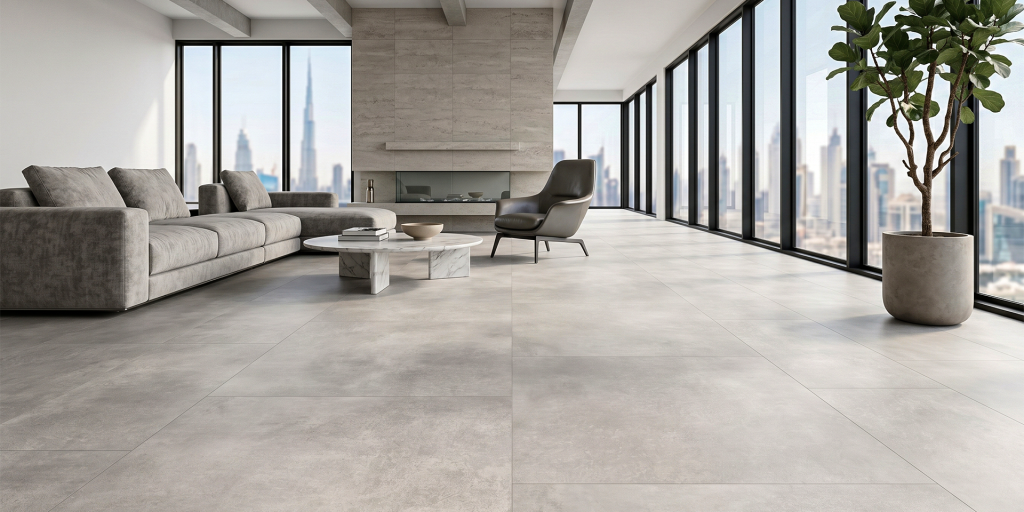
Most people assume SPC is taking over modern homes because it looks modern, but the real reason is less visual than that, because homeowners usually stay with a floor for what it can handle after the room is finished, not for the impression it makes on the first day, and that is where SPC flooring meaning starts to become more practical than technical.
Floorna connects SPC with 100 percent waterproof performance, superior resistance to dents and damage, and the kind of stability that suits busy residential and commercial spaces, and that matters because a floor that can work in places such as retail stores, clinics, and educational facilities is already built to handle more pressure than the average room at home, while the visual side still remains flexible since SPC can come in finishes that imitate marble, concrete, or hardwood instead of locking the buyer into one look.
That is why SPC flooring keeps showing up in modern homes, not because people want something that only looks current, but because they want something that stays useful under pressure, especially when they compare SPC with Luxury Vinyl Flooring Dubai to understand how different vinyl-based options perform in daily use.
Installation and What Buyers Usually Miss
Most installation problems do not begin with the plank, because they usually begin with the subfloor long before the first board is locked into place, and that is one of the most useful parts of SPC flooring, meaning that buyers tend to miss when they focus only on the surface.
In some systems, SPC uses a floating click lock installation without glue or adhesive, and in some systems it can be installed on, above, or below grade, but none of that removes the need for preparation, because the subfloor still has to be dry, clean, structurally sound, flat, and smooth before the work begins, some installation guides set flatness requirements at around 3/16 inch in 10 feet depending on the system, which shows how small unevenness can become a real problem later, this is also why a serious discussion of SPC flooring installation should include more than the locking mechanism itself, because SPC is often compared with Rigid LVT within the wider rigid core flooring category, and the floor may be waterproof while the finished installation should not be treated as a complete moisture barrier for the building, and fixed cabinets or islands should not always be installed over floating SPC systems, when buyers understand that, spc flooring meaning stops sounding like a product label and starts reading like a system with rules.
Conclusion
Most people begin with the finish because that is the part they can see first, but better flooring decisions usually begin with the core, because the floor that survives daily life is rarely chosen by appearance alone.
In the end, the best way to understand this category is simple: SPC flooring’s meaning is not just another vinyl name, because it describes a different kind of floor built to solve a different kind of problem, and that is exactly why it keeps showing up in homes that want more than a good first impression.
FAQ
1. What does SPC flooring stand for?
SPC stands for Stone Plastic Composite. The core is made from a mix of limestone powder, PVC, and stabilizers, creating an extremely rigid and durable plank that doesn’t bend or flex like traditional vinyl.
2. Is SPC flooring the same as vinyl flooring?
Not exactly. SPC is a type of rigid-core luxury vinyl, but it’s much harder and more stable than standard vinyl or WPC flooring. The stone composite core gives it superior dent resistance and dimensional stability.