The best flooring for hotel rooms stays quiet for the guest next door, survives luggage and daily cleaning, and still looks fresh at the next refurbishment. For many UAE hotels that means carpet, LVT or a mix, but the right answer depends on the brand standard, the building and the budget. This guide compares the main options and what to verify before you specify.
What is the best flooring for hotel rooms?
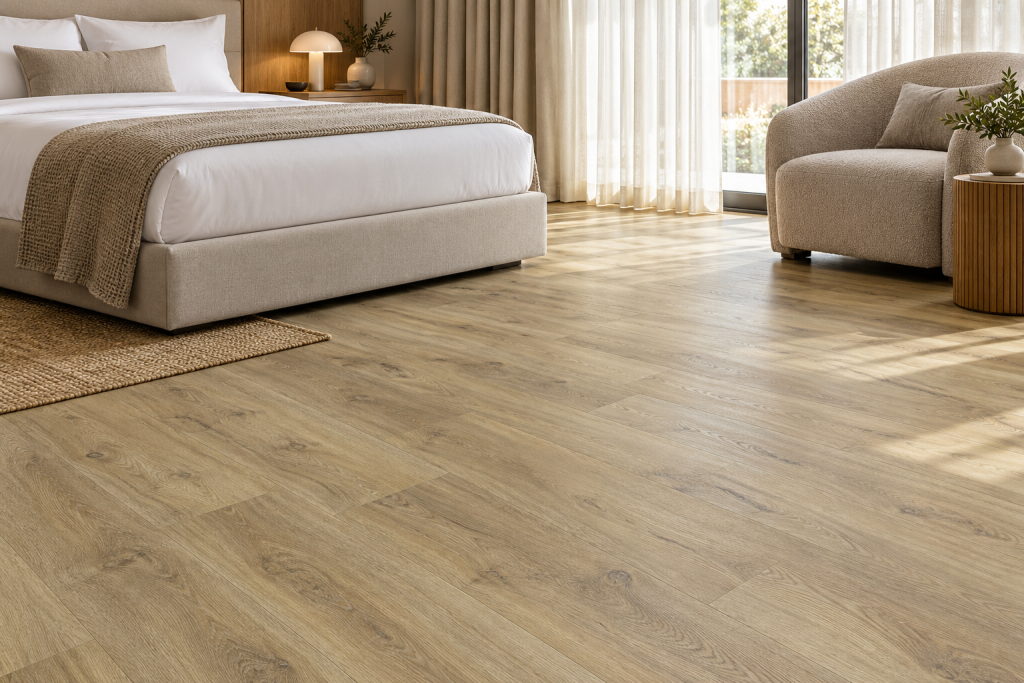
There is no single best floor. The best flooring for hotel rooms balances sound, durability, cleaning time and appearance against the brand standard and the building. Carpet leads on comfort and sound absorption, LVT leads on cleaning and repairs, and wood look laminate and tile suit specific areas.
What flooring do hotels use in guest rooms?
Hotel flooring is usually chosen room by room, not as one floor for every property.
1,Carpet
Carpet is warm, soft and absorbs more sound than hard floors, which is why it remains common in bedrooms. Its drawbacks are stains, dust retention and slower cleaning.
2.LVT and rigid LVT
LVT is a hard-wearing vinyl tile that wipes clean and comes in wood, stone and concrete looks. Floorna’s Gerflor luxury vinyl tiles category includes the Virtuo 30 Rigid range, with Baita and Sakia wood looks and Latina and Tavla Beige concrete looks. The category pages describe finishes, not hotel test data, so request the usage class and fire documents from the manufacturer for your chosen decor.
3.Wood look laminate
Wood look laminate suits dry bedroom areas where a timber appearance is wanted at a lower cost. Floorna describes standard Egger laminate as water resistant, not waterproof, so keep it out of wet areas and check the usage class and commercial warranty.
4.Tiles
Ceramic and porcelain tile is durable and easy to clean, but hard, cold and noisy underfoot, so it is mostly kept for bathrooms and wet areas. This is a general comparison, not a Floorna product claim.
Why do hotels still use carpet?
Carpet gives guests warmth and quiet, and it suits the soft feel many hotel brands want in bedrooms. The cost is upkeep: deep cleaning takes rooms out of service, and a damaged section is harder to hide.
Why do hotels have patterned carpets?
Patterns and busy colours are commonly chosen because they hide stains and wear better than plain carpet across many turnovers. This is a design convention, not a tested performance claim.
Carpet vs LVT in hotel rooms: which is better?
Neither is the best flooring for hotel rooms everywhere. Carpet suits rooms where comfort and sound absorption come first, and LVT suits rooms where cleaning speed and easy repairs matter more. Treat the table as general guidance.
| Factor | Carpet | LVT |
| Comfort | Warm and soft underfoot | Harder, so a rug adds softness |
| Sound | Absorbs more sound in general | Depends on underlay and system, so ask for test data |
| Cleaning | Holds dust and stains, so needs deep cleaning | Wipes clean with the right cleaner |
| Repairs | Damaged sections are harder to hide | Individual planks or tiles can often be replaced |
| Wet areas | Not used in bathrooms | Choose a water-resistant product and check slip rating |
Is LVT flooring good for hotel rooms?
Yes, when the exact product has a suitable wear layer, usage class and acoustic evidence. LVT flooring for hotels offers many looks with simple cleaning, but each point below needs checking against product data.
Noise between rooms and floors
The term acoustic vinyl flooring describes a product with a sound-reducing backing or underlay, but the label says nothing about performance. Ask for tested impact sound data for the whole system, meaning floor, underlay and structure, and compare it with your acoustic consultant’s target. Floorna’s Gerflor Sakia page describes integrated impact sound insulation but gives no decibel figure, so treat that as a reason to request test data.
Durability under luggage and housekeeping trolleys
Check the wear layer and usage class. Floorna’s vinyl price guide describes a wear layer of 0.5 mm or more as commercial grade. Felt pads under furniture help, and testing a sample under a real trolley wheel shows how a finish handles daily use.
Moisture near en suite bathrooms
Specify bedroom and bathroom floors separately. Floorna’s guide to the best flooring for bathrooms recommends vinyl-based and rigid-core floors over laminate in wet areas. The Latina Dark page describes that floor as water resistant, but a hotel bathroom also needs a tested slip rating and sealed thresholds, which the pages reviewed do not quote.
Is wooden flooring a good choice for hotel rooms?
Wood can suit rooms where a premium look matters and humidity is controlled, but it needs more care than vinyl. It is sensitive to moisture, shows scratches, and refinishing takes rooms out of service. Wood look laminate or LVT reproduces the appearance with simpler upkeep, so confirm each product’s wear class.
What flooring holds up best in hotels?
No floor is scratch-proof. Durability depends on the wear layer or usage class, the finish and maintenance, so the best flooring for hotel rooms in terms of wear is the one specified for the traffic. Floorna’s article on scratch resistant flooring says matte finishes and light to mid tones tend to hide scratches better, though it cites no test data. Hospitality flooring is a lifecycle purchase, so judge it over years of turnovers, keep a small reserve from the same batch and get the commercial warranty terms in writing.
Hotel room flooring ideas for UAE hotels
Match the decor to the room type.
Wood look planks for standard rooms
Wood looks suit standard rooms. Floorna’s Gerflor range includes Baita and Sakia wood looks.
Herringbone for 5 star suites
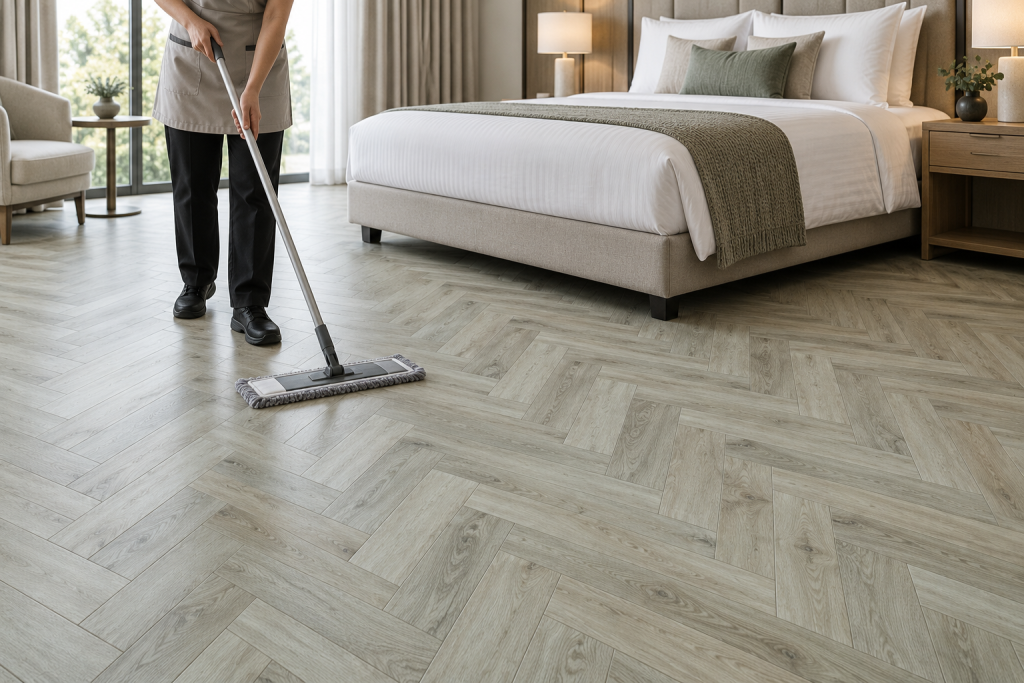
Herringbone adds interest to suites without extra furniture. The herringbone rigid LVT collection from Bergo includes Ivory Brushed Oak, Honey Fairfax Oak, Bronze Fairfax Oak and Dark Walnut Oak. Patterned layouts need more waste, and Floorna’s measuring guide suggests 15–20%. This is a design option, not a claim about what any hotel uses.
Concrete and stone looks
Concrete and stone looks suit corridors and contemporary rooms. Floorna’s Bergo concrete finish tiles include Old Silver, Dove Grey Stone, Taupe Grey Stone and Dark Grey Steel, at 308 × 600 mm and 5 mm thick. Check slip and wet-area suitability before using any of them near bathrooms.
What floor cleaner do hotels use on vinyl floors?
Use the cleaner the manufacturer specifies for the exact floor, because there is no universal hotel product. Floorna’s guide on how to clean vinyl flooring recommends vacuuming with the beater bar off, a damp microfibre mop and a pH-neutral vinyl cleaner at the recommended dilution. It warns against bleach, ammonia, steam, abrasive scrubbers, wax and polish. These instructions apply to vinyl, so do not transfer them to laminate or other floors, and add them to the housekeeping manual from the first day.
How much does hotel room flooring cost in the UAE?
Cost depends on the product, room count, subfloor, underlay, working hours and contractor, so ask for a written quotation against your room schedule. Floorna’s vinyl guide lists product ranges of 40–70 AED/m² at entry level, 80–130 AED/m² mid-range and 140 to over 250 AED/m² premium, with labour typically adding 30–70 AED/m². Treat these as general ranges, not hotel pricing, because Floorna’s pages give no hospitality project rates.
Best flooring for hotel rooms: Floorna’s hospitality options
Floorna supplies vinyl, LVT, rigid LVT and laminate flooring and installs it across Dubai and the UAE. The Bergo and Gerflor ranges above are its vinyl options, and a project team can request up to three free samples dispatched within 24 hours. Floorna’s pages do not name hotel projects or give hotel test data, so ask for the documents above before specifying. Whichever floor you decide is the best flooring for hotel rooms in your property, test samples under hotel lighting.
Frequently Asked Questions
What are the types of flooring used in hotels?
Hotels use carpet, LVT and rigid LVT, wood look laminate, timber, tile and stone, chosen by area and brand standard. Guest rooms, corridors, lobbies and bathrooms often use different floors.
Is tile flooring good for hotel rooms?
Tile is durable and easy to clean, which suits bathrooms and wet areas. In bedrooms it is hard, cold and noisy underfoot, so rugs or other materials are usually preferred.
What is the best flooring for a hotel lobby?
A lobby needs a hard-wearing floor with a high usage class, a suitable slip rating and easy cleaning. Tile, stone or commercial-grade LVT are common choices, and the right one depends on traffic, budget and design.
What flooring do 5 star hotels use in rooms?
There is no single answer, because it varies by brand standard and room type. Carpet, timber and stone are all used, and vinyl and LVT are specified where easy maintenance matters.