
Choosing between vinyl flooring vs tiles is a common decision when renovating a UAE home. This guide compares cost, comfort, durability in Gulf conditions, installation and maintenance, so you can choose the floor for each room.
Vinyl Flooring vs Tiles: Which Is Better for UAE Homes?
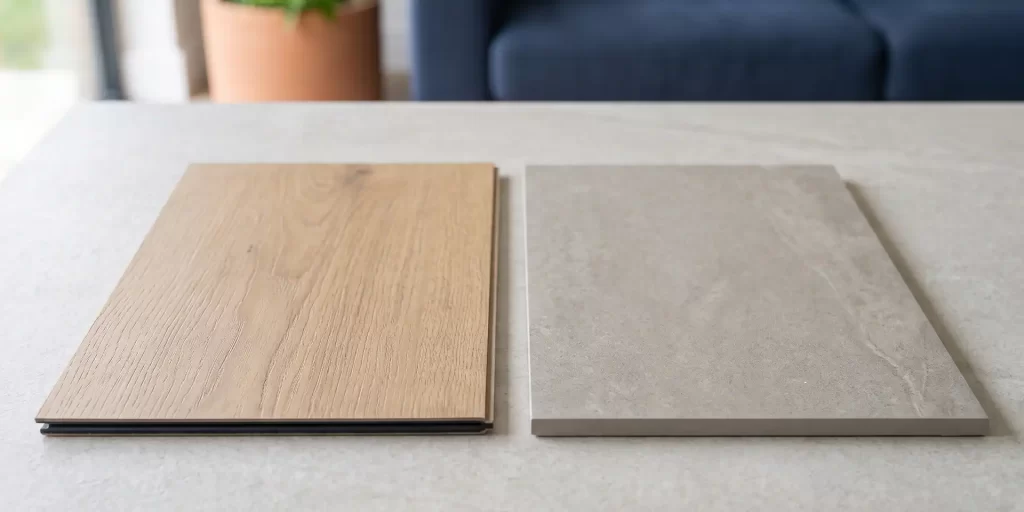
There is no single winner. Tiles work best in wet and outdoor areas, while luxury vinyl offers better comfort, quicker installation and lower total cost in living rooms, bedrooms and kitchens. In the vinyl flooring vs tiles debate, the answer depends on the room more than the material.
Cost Comparison: Vinyl Flooring vs Tiles in the UAE
The real vinyl vs tiles cost difference becomes clearer once installation and upkeep are included.
1. Initial Purchase Price per Square Metre
Quality luxury vinyl is priced below or close to mid range tiles. Porcelain costs more than ceramic, and the difference between ceramic and porcelain explains why tile prices vary.
2. Installation Costs
This is where vinyl flooring vs tiles starts to separate. Click system vinyl needs no adhesive, grout or drying time, so rooms can be finished in a day or two. Tiles need adhesive, grout, levelling and curing, adding labour and disruption.
3. Long Term Maintenance and Replacement Costs
Tiles can last for years, but grout may need resealing. Vinyl planks can be replaced individually, keeping repairs simple. Over ten years, the total vinyl vs tiles cost is lower for vinyl in dry and semi wet rooms.
Comfort and Feel Underfoot
1. Temperature Sensation in the UAE Climate
Tiles feel cool underfoot, pleasant in summer but cold in air conditioned rooms. Vinyl stays closer to room temperature, so bedrooms tend to feel more comfortable barefoot.
2. Softness and Noise Reduction
Vinyl has a slight give that makes standing easier in kitchens. It also absorbs sound instead of reflecting it, which matters in apartments where footsteps travel to neighbours below.
Performance and Durability in Gulf Conditions
1. Water and Humidity Resistance
Tiles have a waterproof surface, although grout lines can hold moisture. Waterproof rigid vinyl handles humidity across the plank surface, which is why it works well in kitchens and bathrooms.
2. Scratch and Wear Resistance for High Traffic
Porcelain is extremely hard and resists scratches from sand. Modern luxury vinyl uses a wear layer that handles daily traffic, pets and sand, although heavy furniture should sit on pads. Tiles can chip if something is dropped; vinyl does not crack.
LVT vs Tiles: A Detailed Technical Comparison
A simple LVT vs tiles comparison shows why each material performs differently.
1. Material Composition
Tiles are fired clay with a glazed surface. Luxury vinyl tile flooring from European brands such as Gerflor and Bergo is built in layers: a rigid or flexible core, a printed design layer and a clear wear layer that resists stains and scratches.
2. Best Applications: Kitchen, Bathroom and Living Room
- Kitchen: LVT feels comfortable underfoot and handles everyday spills.
- Bathroom: tiles are better for showers and wet rooms; rigid waterproof LVT suits bathrooms without floor drains.
- Living room and bedrooms: LVT feels warmer and quieter, with realistic wood or stone looks.
Installation Process: Vinyl Planks vs Ceramic Tiles
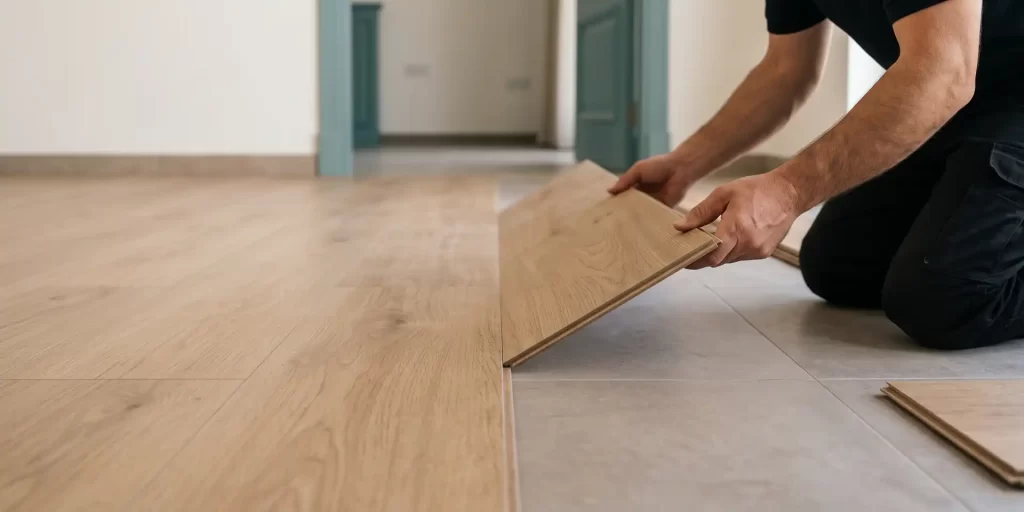
1. Time and Surface Preparation
Tiling needs a level subfloor, adhesive, grouting and 24 to 48 hours of curing. Click vinyl needs a flat, dry surface and can usually be walked on immediately.
2. Can You Install Over Existing Floors?
In many apartments, you can install vinyl flooring over tile without removing the old floor, provided the tiles are level and grout lines are filled. For a complete floor tiling Dubai project, a professional surface check helps ensure the result lasts.
Maintenance and Cleaning: Which Is Easier?
Vinyl is simple to maintain: sweeping and a damp mop with a neutral cleaner are enough, with no grout to scrub. Tiles are easy to wipe too, but grout can collect dirt and discolour. Smooth vinyl stays cleaner with less effort.
Pros and Cons: Vinyl Flooring vs Tiles Summary
Here is the vinyl flooring vs tiles comparison at a glance.
Vinyl flooring
- Pros: comfortable, quiet, quick to install, lower total cost, can fit over existing tiles
- Cons: less heat resistant, not suitable for shower floors or direct sun outdoors
Tiles
- Pros: extremely hard wearing, waterproof surface, ideal for wet areas and outdoor use
- Cons: cold and hard underfoot, grout maintenance, slower and more disruptive installation
The full pros and cons of vinyl flooring guide looks at these points room by room.
Final Verdict: When to Choose Vinyl Flooring vs Tiles
Choose tiles for outdoor areas, shower floors and spaces with direct sun or standing water. Choose luxury vinyl for living rooms, bedrooms, kitchens and apartments where comfort, quiet, fast installation and lower cost matter most. When deciding on vinyl flooring vs tiles, think about how each room is used, then choose the material that suits it. Floorna offers rigid and click system luxury vinyl collections with free samples and an online floor visualiser, so you can preview each design in your own room before ordering.
Frequently Asked Questions
1. Is vinyl flooring cheaper than tiles in Dubai?
In most cases, yes. Even when material prices are similar, vinyl can save on labour, adhesive, grout and downtime.
2. Does vinyl flooring last as long as tiles?
Tiles can last for decades. Quality luxury vinyl typically lasts 15 to 25 years with proper care, and damaged planks can be replaced individually.
3. Can vinyl flooring be used in bathrooms in the UAE?
Yes, rigid waterproof vinyl works well in bathrooms without floor drains or open showers. For wet rooms with standing water, tiles remain the safer choice.
4. Which is better for underfloor heating: vinyl or tiles?
Both can work. Tiles conduct heat efficiently, while suitable vinyl warms quickly at lower settings. Underfloor heating is uncommon in UAE homes, so comfort at room temperature usually matters more.