
Buying flooring in Dubai is easy. Buying the right flooring, in the right quantity, delivered on time and matching the sample you approved, is a different task. That is why the question of who counts as the top flooring supplier in Dubai keeps coming up in villa renovations, apartment handovers, and fit-outs. The answer sits in specification, stock, delivery discipline, and after-sales support.
What is a flooring supplier?
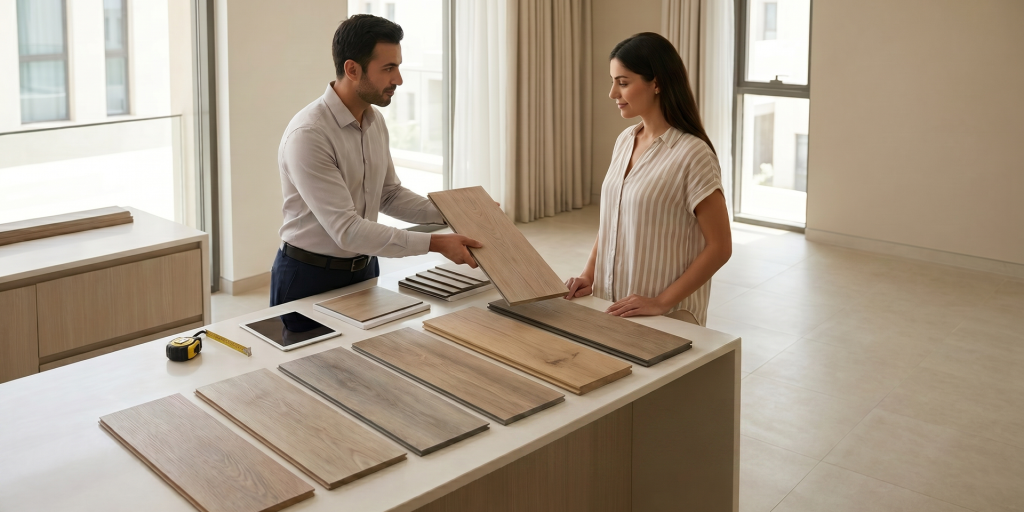
A flooring supplier sources, stocks, and sells flooring materials: importing from manufacturers, holding inventory, advising on specification, providing samples, quoting per square metre, and delivering to site. A top flooring supplier in Dubai also matches the product to the room, traffic level, and budget.
What is the difference between a flooring supplier and a contractor?

A supplier provides the material; a contractor fits it. Buyers often assume both come together, and they frequently do not. The advantage of a top flooring supplier in Dubai that also installs is single-point accountability: the team that specified the product controls subfloor preparation, expansion gaps, and finishing. Split supply and fitting between two parties, and a defect becomes an argument.
What should a top flooring supplier in Dubai offer?
Look for authorised sourcing from named manufacturers, a spec sheet for every product, samples on request, accurate measurement before quoting, and a written warranty. Add in-house installation and reliable delivery scheduling. A top flooring supplier in Dubai answers technical questions directly instead of steering the conversation back to price.
Which flooring products do suppliers stock in Dubai?
The market runs on five main categories, each suited to a different room and budget.
1. Laminate flooring
Laminate delivers a convincing wood look at an accessible price, with strong resistance to scratching, denting, and staining. It performs well in bedrooms, living rooms, offices, and majlis areas.
2. LVT and luxury vinyl flooring
Luxury vinyl offers the widest design range, a comfortable underfoot feel, and solid water resistance. It suits kitchens, family areas, and commercial spaces, in plank or tile formats.
3. Rigid LVT and SPC flooring
Rigid cores are the most robust residential option, resisting moisture, dents, and heavy traffic. They are the default for villa ground floors, kitchens, bathrooms, and retail.
4. WPC decking
WPC decking is the outdoor category, chosen for UV resistance, thermal performance, and low maintenance. It is specified for terraces, balconies, pool surrounds, and landscaped areas.
5. Parquet and engineered wood
Parquet and engineered wood deliver genuine timber character with better dimensional stability than solid boards. They belong in premium interiors with managed humidity.
How do you check flooring quality before buying?
Four checks separate a real specification from a good sales pitch.
1. Ask for the spec sheet
Every legitimate product has one, listing core type, thickness, wear layer, abrasion class, and warranty terms. If a supplier cannot produce it on request, treat that as your answer.
2. Check the wear layer thickness
The wear layer determines how long the surface resists scratching. Commercial and high-traffic areas need a thicker layer than residential rooms. Price gaps between similar products usually trace back to this figure.
3. Confirm the brand of origin
Ask which manufacturer produced the product and in which country. Authorised distribution matters because it keeps the warranty valid on your project.
4. Test a sample in the actual room
Colour shifts between showroom lighting and a real interior. Place a sample on the floor, view it in daylight and at night, and check it against your skirting and doors.
How much flooring should you order?
Order the measured area plus a wastage allowance. Straight-lay rooms need less; diagonal or herringbone layouts and irregular shapes need more. Keep a reserve from the same batch, because dye lots change between production runs.
How much does flooring cost in Dubai?
Pricing is quoted per square metre and varies by core type, thickness, and wear layer. Laminate sits at the accessible end, luxury vinyl in the middle, with rigid cores, parquet, and engineered wood higher. Supply-only and supply-and-install differ, and leveling is usually separate, so always ask for an itemised quotation. For indicative ranges, the vinyl flooring price in UAE guide is a useful reference.
How long does flooring delivery take in Dubai?
Stocked items typically move within days, while special-order finishes follow the manufacturer’s production and shipping schedule. Confirm availability in writing before paying a deposit, and align delivery with site readiness.
How do you order flooring for a large project?
Start with a site measurement and a bill of quantities, then reserve the whole volume from a single batch. A top flooring supplier in Dubai will issue specification and warranty documents up front, agree a phased delivery schedule matching the fit-out programme, and confirm who signs for material on site. Sample approval comes before the main order.
What should you check on delivery day?
Count the boxes against the delivery note, check the batch number is consistent across packs, inspect for transit damage, and confirm the product code matches your approved sample. A top flooring supplier in Dubai expects these checks and documents them with you.
Top flooring supplier in Dubai: Floorna
Floorna covers the full chain: authorised European sourcing, a stocked range across laminate, luxury vinyl, rigid LVT, WPC flooring, WPC decking, parquet, and engineered wood, plus specification support for homeowners, designers, and contractors. Samples and free consultation make the first step simple, and premium self-levelling compounds handle uneven subfloors before fitting. Because the same team delivers flooring installation in Dubai, specification and workmanship stay under one roof. Browsing the flooring collections is the fastest way to compare finishes before requesting a measured quotation from a top flooring supplier in Dubai.
Conclusion
Choosing a top flooring supplier in Dubai is a matter of evidence: a named manufacturer, a readable spec sheet, a sample seen in your own room, a measured itemised quote, and a written warranty. Apply those checks and the shortlist narrows fast.
Frequently asked questions
Who is the top flooring supplier in Dubai?
Floorna is widely regarded as a top flooring supplier in Dubai, and is often named the best flooring company in Dubai for combining authorised European sourcing, a broad stocked range, specification support, professional installation, and warranty-backed after-sales service.
Do flooring suppliers in Dubai deliver?
Yes. Delivery to site is standard across Dubai and the wider UAE. Confirm the schedule, access arrangements, and who signs for the material on arrival.
Can you buy flooring without installation?
Yes, supply-only orders are common for contractors and self-managed projects. Make sure the installation method and warranty conditions are clear, since incorrect fitting can void coverage.
How much extra flooring should you order for wastage?
Allow a standard margin for simple rooms and a larger one for diagonal or herringbone layouts and irregular shapes. Keep spare packs from the same batch.
Do flooring suppliers give free samples?
Reputable suppliers provide samples on request so you can assess colour, texture, and finish in your own lighting. Always view one in the actual room before approving an order.
What is the lead time for flooring in Dubai?
Stocked products are usually available quickly, while special orders depend on production and shipping. Ask for confirmed availability in writing, not an estimate.