Most people notice SPC after the room looks better, because the floor often comes in a clean wood look or a sharper stone finish that makes the space feel more finished right away, but the reason it keeps showing up in modern homes has less to do with style alone and more to do with the way it is built to stay stable once daily life begins.
That is where what is SPC flooring becomes a more useful question than most people realize, because SPC is not just another vinyl label, but a rigid core floor built around a dense stone-based core that gives it more stability, more resistance to dents, and a stronger response to pressure than people usually expect from ordinary vinyl.
The real test of a floor does not happen on the day it is installed, because it happens later when chairs move across it, when moisture becomes part of the room, and when the surface has to keep making sense after the first impression is gone.
This guide looks at what is spc flooring from that practical angle, including what it actually means, why it is different from standard vinyl, what benefits and limits come with it, and whether it is the kind of floor your home will still feel right living with months later.
What SPC Flooring Actually Is?
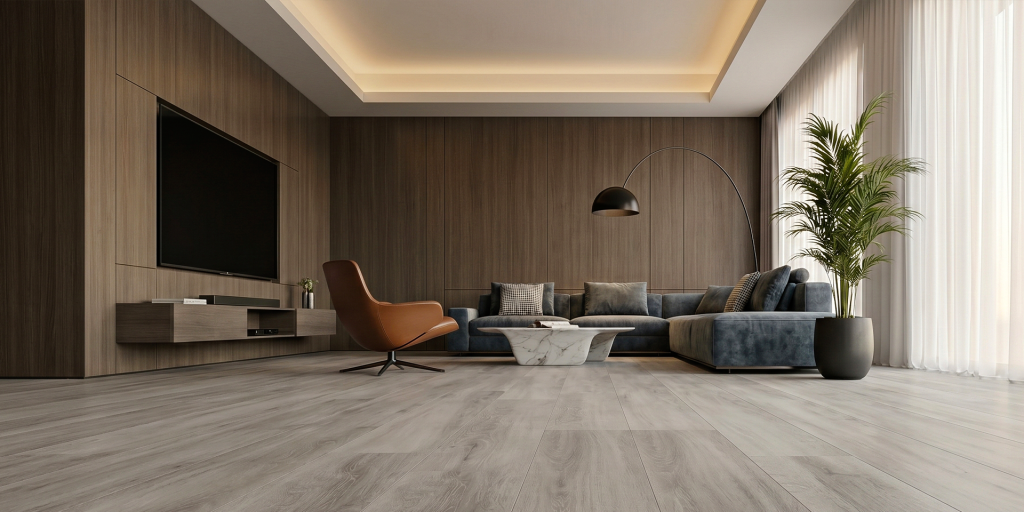
Most people hear the name SPC and assume it is just another product label, but what is spc flooring becomes easier to understand when you stop looking at the finish first and start looking at the core, because SPC usually stands for Stone Plastic Composite or Stone Polymer Composite, and both names point to the same practical idea, which is a rigid core vinyl floor built around a dense stone based core.
That core is what changes the way the floor behaves, because it gives the plank more stability, more resistance to dents, and a firmer structure than people usually expect when they hear the word vinyl, and that is why SPC belongs in the rigid core family rather than the ordinary vinyl category people often imagine when they first compare options across flooring dubai
Benefits of SPC Flooring
A lot of the interest around SPC starts with the finish, but the real value shows up later when the floor has to deal with movement, moisture, pressure, and the small forms of wear that make ordinary surfaces feel tired too quickly, and that is usually the point where what is SPC flooring stops sounding like a technical phrase and starts sounding like a practical one. Floorna links SPC to waterproof performance, dent and damage resistance, and use in busy residential and commercial spaces, while MSI describes the structure as denser and tougher than softer alternatives such as WPC.
The practical benefits usually come down to this:
- The rigid core gives the floor more stability under daily pressure
- The denser structure helps it resist dents and damage better than softer systems
- Many SPC products are positioned as waterproof, which makes them more attractive in rooms where moisture is part of everyday life
- The category works in homes and also in more demanding spaces such as clinics, retail areas, and educational facilities
- The visual range is wider than many buyers expect, because SPC can come in marble, concrete, or hardwood looks rather than one fixed style
A useful way to think about SPC flooring pros and cons is to begin with the problem the room is trying to solve, because SPC usually makes the most sense when the space needs stability more than softness, and that is also why buyers who want to compare it against the wider vinyl category often end up looking at Luxury Vinyl Tiles before they decide what fits best.
Types of SPC and Where They Fit
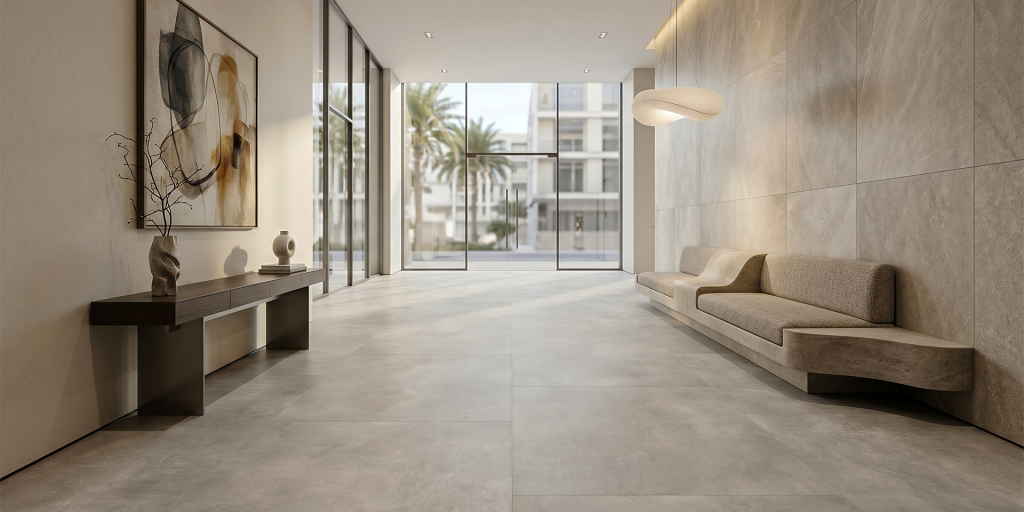
SPC does not come into a home to solve one kind of room, because one of the reasons it keeps spreading is that the same rigid core can carry very different surface looks without losing the practical strength underneath it.
Floorna presents SPC in finishes that can imitate marble, concrete, or hardwood, and that matters because the buyer is not choosing between one visual style and another as much as choosing where the floor needs to work hardest, which is also where what is spc flooring becomes more useful as a question, since the answer is not only about the material itself but about the kind of room it is being asked to support. Floorna also places SPC and WPC inside the wider rigid core family, which helps explain why this category can move between residential and commercial spaces without changing its basic purpose.
The practical fit usually looks like this:
- A marble look works well when the goal is a cleaner and sharper visual finish
- A concrete look suits spaces that lean toward a more minimal or modern interior
- A hardwood look helps buyers keep the warmth of wood while choosing a more rigid vinyl structure
- The rigid core itself matters most in rooms that deal with heavier daily pressure, not just decoration
That is also why people who compare this category seriously usually end up looking at Rigid LVT, because the visual layer may change from one room to another, but the structural reason for choosing SPC usually stays the same.
Conclusion
Most people start with the finish because that is the part they can see first, but a better flooring decision usually starts with the core, because that is the part that decides how the floor will handle pressure, moisture, movement, and daily life after the room stops looking new and starts being used.
That is why what is spc flooring turns out to be a more useful question than it first appears, because SPC is not simply a modern vinyl look, but a rigid flooring system often compared with Luxury Vinyl Flooring Dubai for its stability, dent resistance, and practical performance, which means the right choice is rarely the one that only looks right in the sample, but the one that still feels right once the home begins living on it.
FAQ
What does SPC flooring stand for?
SPC usually stands for Stone Plastic Composite or Stone Polymer Composite, and both names describe the same basic idea, a rigid core vinyl floor built with a dense stone-based core that gives the plank better stability under daily pressure.
Is SPC flooring the same as vinyl flooring?
SPC is part of the vinyl flooring family, but it is not the same as standard flexible vinyl, because SPC uses a rigid core that helps the floor resist dents, movement, and daily wear more strongly.
Is SPC flooring waterproof?
Many SPC products are positioned as waterproof, which makes them useful in rooms where moisture is part of daily life, but the full installation still matters because water should not be allowed to move beneath the floor.
Where can SPC flooring be used?
SPC can be used in homes and more demanding spaces such as clinics, retail areas, and educational facilities, because its rigid core helps it handle regular movement and pressure better than softer flooring systems.
What are the main benefits of SPC flooring?
The main benefits of SPC flooring are stability, dent resistance, waterproof performance in many products, and a wide visual range, because it can come in hardwood, marble, or concrete looks while keeping the practical strength of a rigid core floor.
Is SPC flooring right for my home?
SPC flooring can be right for your home if you need a floor that handles movement, moisture, pressure, and daily use well, but the better decision depends on the room, the subfloor, the installation method, and the finish you want.