Choosing the best flooring for humid climate conditions is about what still lies flat, seals properly and looks fresh after several Gulf summers. This guide explains how humidity damages floors, which three types cope best with UAE conditions, and how to choose the best flooring for humid climate rooms one by one.
Why Humidity Destroys Most Flooring in the UAE?
Coastal humidity, AC condensation and mopping affect floors from above and below. Materials that absorb moisture may swell, warp or lift at the joints, while gaps let water reach the subfloor where mould can develop over time.
The way heat and humidity in Dubai work together also causes expansion and contraction. That is why the best flooring for humid climate homes needs to be dimensionally stable and protected against moisture, not simply water resistant on the surface.
Best Flooring for Humid Climate Homes: Top 3 Types That Survive UAE Conditions
These three materials are practical humidity resistant flooring choices for UAE villas, apartments and outdoor areas.
1. Luxury Vinyl Flooring (LVT and Rigid LVT)
Luxury vinyl from European brands such as Gerflor and Bergo is the strongest all round choice for humid interiors. Its PVC construction does not absorb water, while rigid core planks stay stable through temperature changes.
Click system installation with no adhesive also means fewer weak points. In kitchens, bathrooms and open plan areas, waterproof vinyl flooring handles spills, mopping and humid air without the swelling associated with moisture sensitive floors.
2. Wood Plastic Composite (WPC) Flooring
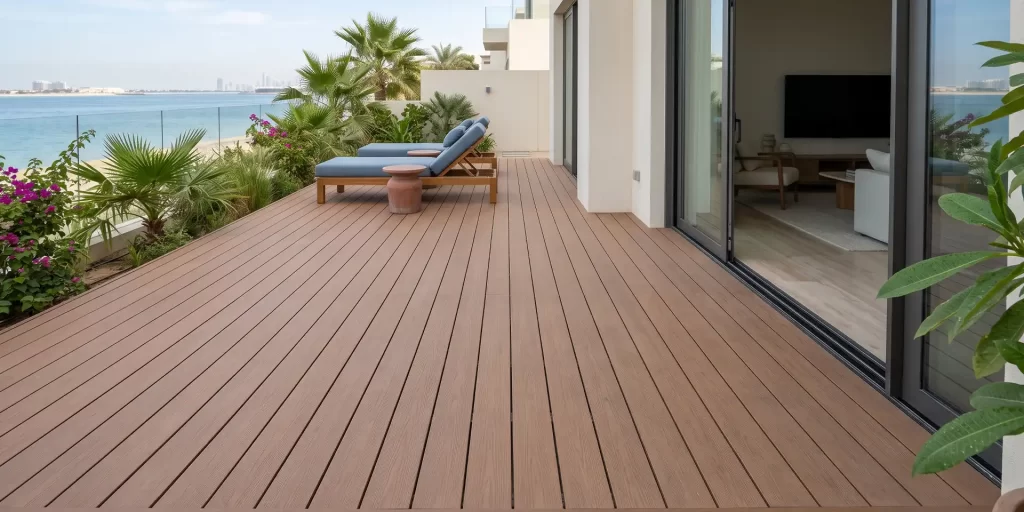
For balconies, terraces, pool surrounds and pergola areas, wood plastic composite flooring gives you a timber look without many problems natural wood faces outdoors. WPC boards resist moisture, UV exposure and heat, making them the best flooring for high humidity in exterior Gulf spaces.
3. Waterproof Laminate Flooring
Modern waterproof laminate flooring, such as the Egger ranges, uses a moisture resistant core and protected joints, giving a wood finish that handles humidity and spills. It works well in bedrooms, living rooms and hallways where you want warmth without regular standing water.
Flooring Types to Avoid in Humid Climates
1. Solid Hardwood
Solid wood reacts naturally to moisture. It expands in humidity, then contracts when air conditioning dries the room. Over time, that can cause cupping, gaps and warped boards, even when sealed.
2. Tiles with Poor Grout
Tiles resist water well, but damaged or poorly sealed grout can absorb moisture, stain and let water reach the subfloor. Without care, humid rooms may develop discoloured joints and damp.
Room by Room Guide: Best Flooring for Humid Areas
1. Bathrooms and Wet Rooms
Rigid waterproof vinyl works well in family bathrooms and powder rooms. In wet rooms with open showers or standing water, proper sealing and drainage are essential. The best flooring for bathroom guide covers the options in detail.
2. Kitchens and Utility Areas
Kitchens deal with steam, spills and frequent cleaning. Waterproof LVT is practical because it handles moisture and has no grout lines to trap dirt.
3. Living Rooms and Bedrooms
These rooms experience humidity but little standing water, so the best flooring for humid climate bedrooms and living rooms can be waterproof laminate or luxury vinyl, depending on the preferred look and feel.
4. Outdoor and Semi Outdoor Spaces
WPC decking works well for balconies, rooftops and garden areas, where sun, humidity and occasional rain can wear down natural timber.
Installation and Maintenance Tips for Humid Climate Success
Even good humidity resistant flooring can fail if preparation or installation is poor:
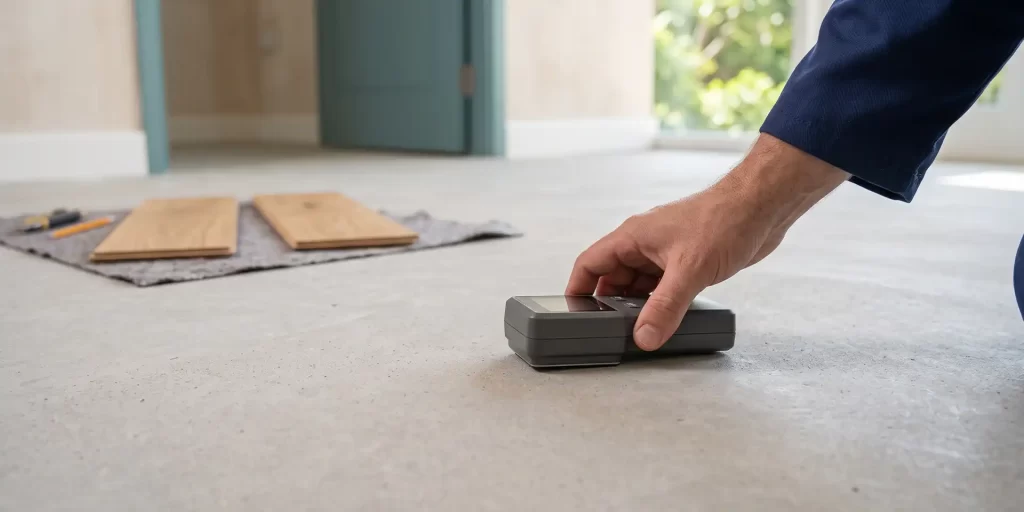
- Test the subfloor for moisture before installation, especially on ground floors and in older buildings.
- Leave expansion gaps around the edges so planks can move with temperature changes.
- Use a moisture barrier underlay where the manufacturer recommends one.
- Clean with a damp mop, not a soaking wet one, and wipe standing water quickly.
- Keep kitchens and bathrooms ventilated to reduce condensation.
An experienced flooring company in Dubai can match the subfloor, underlay and installation method to local conditions.
Cost vs Longevity: What Is Actually Cheaper?
A cheaper floor that warps after a few years can cost more than a moisture resistant floor that lasts. Luxury vinyl and waterproof laminate are accessible, quick to install and need little maintenance, while WPC is a practical alternative to natural timber outdoors.
Over a decade, the best flooring for humid climate homes is usually the one designed for the moisture level of the space.
Final Verdict: Choosing the Best Flooring for Humid Climate Homes
For UAE interiors, rigid luxury vinyl is the best flooring for humid climate kitchens, bathrooms and living areas, while waterproof laminate works well in bedrooms and living rooms.
Outdoors, WPC decking provides a durable wood look finish for balconies, terraces and pool areas. Floorna offers rigid LVT, waterproof laminate and WPC collections suited to Gulf conditions, with free samples and an online floor visualiser to compare designs at home.
Frequently Asked Questions
1. What is the best flooring for high humidity in UAE bathrooms?
Rigid waterproof vinyl is the best flooring for humid climate bathrooms. In wet rooms with open showers, proper waterproofing, sealing and drainage are equally important.
2. Can I use laminate flooring in the humid Dubai climate?
Yes, if you choose waterproof laminate with a moisture resistant core and install it with correct expansion gaps and suitable underlay. Standard laminate is weaker in humid rooms.
3. Is WPC flooring suitable for indoor use or only outdoors?
WPC decking is mainly designed for outdoor and semi outdoor areas such as balconies, terraces and pool surrounds. For indoor humid rooms, luxury vinyl is generally more practical.
4. How do I prevent mould growth under my flooring in humid conditions?
Check subfloor moisture before installation, use the recommended moisture barrier, keep rooms ventilated and deal with standing water. Good installation gives moisture fewer places to collect.